ECO Newsletter Site

Where There’s Smoke There’s Fire in Paradise

Oh crap – that’s smoke. We ventured outside and were choked back inside by the acrid burn smell of fresh fire. Where was it? Nearby? In our neighbourhood? Fear took hold as the sky closed in.

The news spread fast; early that morning a fire had started near a town called Paradise, California. The fire became a storm of flames, whipping through dead and dying brush, spreading 110 metres per minute. We heard of people fighting to survive in rivers and ponds as flames leaped over their heads. Tales of people running for their lives, clothes on fire as firefighters fought to save them. Of lives lost and lives upended as California’s most destructive and deadliest wildfire destroyed over 611 square kilometres; roughly the size of 5 Katowices.

In the Bay Area, the air was so hazardous, schools were closed and over 8 million people were advised to stay indoors — especially the very young and very old. Protective masks sold out. The Paradise fire killed at least 88 people and destroyed more than 13,000 homes. Over 200 people are still missing and 1000s of refugees are camped out in tents, housed in emergency shelters, and living in their cars. More than 50,000 people were evacuated in a twelve-hour stretch of terror, bravery, confusion and turmoil that overwhelmed the evacuation and safety plans.
... Read more ...

Go For It Pedro!

As Spanish President Pedro Sánchez spoke in the High Level Segment, ECO heard in his words the difficulties facing several world leaders. He felt unable to offer new commitments, and played it safe; only mentioning a part of his government’s ambition programme. Uncertainties of all kinds (intensified in Spain by the alarming rise of the extreme right as a political force in the elections in Andalucía, traditionally a socialist stronghold) make the job of leading an ambitious climate transformation doubly difficult. His minority socialist government faces other headwinds — playing ‘catch-up’ after years of conservative inaction; difficulties over the 2019 budget; opposition from the influential car lobby to proposals on diesel taxation and on banning the sale of polluting vehicles by 2040; the difficult relationship with the left-green ‘Unidos Podemos’ alliance; and the shadow of the far right looming over May’s municipal, regional, and EU elections.

ECO sends strength, hope and courage to Sánchez and his team for their climate ambition, energy transition, just transition and ecological transition agendas. Greater dialogue and participation, strong leadership towards political consensus, and setting aside political differences on key issues, are three elements which ECO will watch with interest in the future, as we look forward here in Katowice to the arrival of his Minister and veteran COP negotiator, Teresa Ribera.


... Read more ...

SBSTA is Just the First Step

ECO welcomes today’s SBSTA special event on the IPCC Special Report on 1.5°C as one of the key opportunities to introduce the results to UNFCCC. But ECO thinks this can only be the start.

ECO is disappointed that the Polish Presidency did not respect the usual procedure for the opening ceremony to invite the IPCC Chair to give a presentation on the latest science on climate change, specifically the IPCC SR 1.5.

The IPCC Special Report on Global Warming of 1.5°C is the most important contribution to the Talanoa Dialogue — it is a game- changer that clearly lays out “where we are”, “where we need to go” and “how we can get there”.

ECO hopes the SBSTA Chair agrees and prepares a comprehensive summary from this event, including its key messages, which inform the Talanoa Dialogue and the Convention.

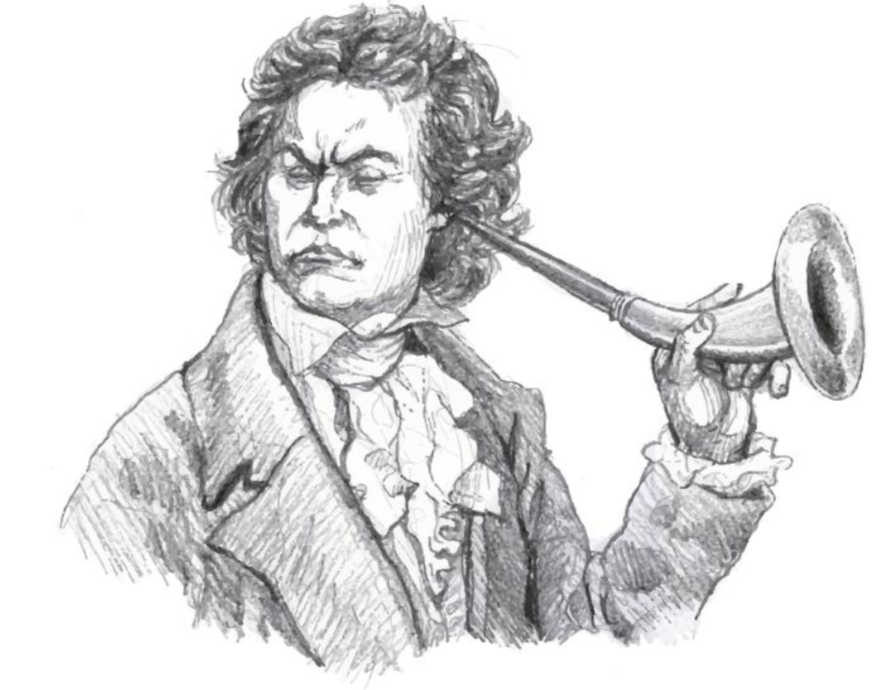
Ludwig: Seeking Space for CSO

image-8488
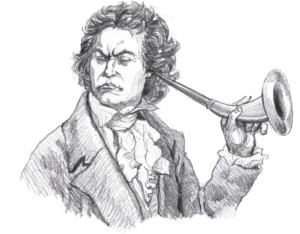
Ludwig never thought he’d look back fondly on the times of the Warsaw Polish Presidency, with visions of abundant WiFi and plenty of seats, tables and plug sockets in the donut- shaped COP19 venue. These dreams were shattered. Instead of finding ready spaces for civil society (and anyone else who does not have megabucks or the lobbying power required to obtain a delegation for spaces to rest his for any available office), Ludwig now finds himself on an epic quests for water, weary feet (and check his weary inbox), for meeting space, power source he can possibly scavenge, and above all an epic quest to find the vanishing spaces! The venue site doesn’t seem to be lacking in space; Ludwig has to walk 8 km a day to get from zone A to zone G. Ludwig is in awe of a venue that manages to both have too few meeting rooms and too much space between them.

Now, Ludwig wants to give the Polish Presidency the benefit of the doubt. Maybe they just got a bit too keen on the concept of gamification. Maybe they just want to inject some energy and fun into our COP experience. Or, maybe they got the wrong impression of what we meant when we pushed for capacity building for resilience… But Ludwig noticed that there is so much less space at this COP.
... Read more ...

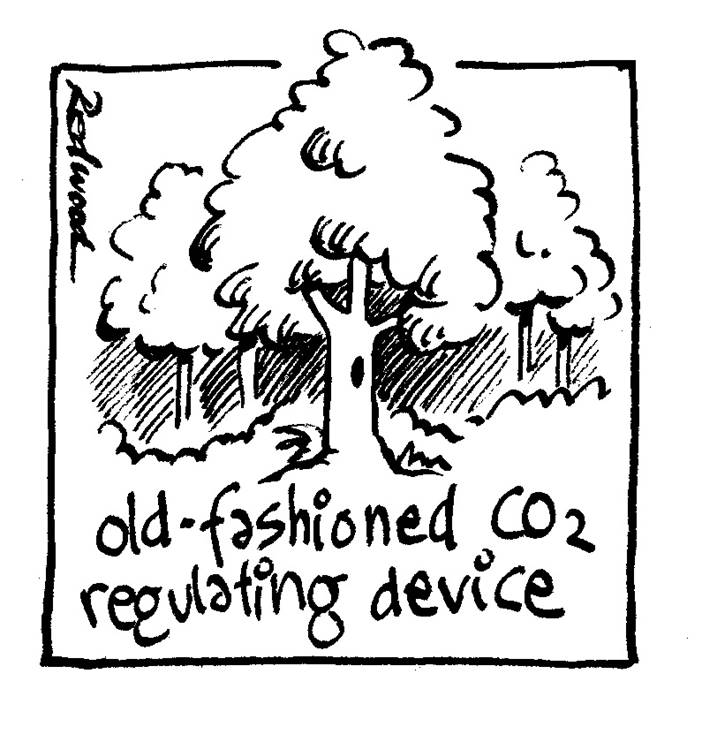
The “Bluffers Guide” to LULUCF

image-8489
Even in the acronym-rich environment of the UNFCCC, the mention of LULUCF, which stands for Land Use, Land Use Change, and Forestry, freaks people out. It might seem complex, but here’s what you need to know:

Q: How could LULUCF rules undermine ambition?
A: Carbon accounting under the Kyoto Protocol fails to capture the real emissions to atmosphere from land and forests.

Q: Do land and forests get special treatment compared to other sectors?
A: Unfortunately they do. Current LULUCF rules allow countries to predict future emissions and get credits if they emit less than expected. If countries emitted exactly as what was predicted, they don’t have to account for those emissions. Imagine if this was the coal sector, it would be like a country saying “We predicted we would build 8 coal fired power stations but we’ve only built 5 so we’re in positive territory.”These false positives can also be used to hide a lack of progress in other sectors.

Q: LULUCF sounds a bit technical!
A: The headlines are simple. Forest and land emissions accounting doesn’t fully reflect emissions that are released into the atmosphere. This should be fixed!

Q: But won’t we fix these old problems with the new guidance developed under the Paris Agreement?
... Read more ...

We’ve Got A Question For You

ECO congratulates all Parties who participated in the multilateral assessment and facilitative sharing of views workshops yesterday. ECO offers special congratulations to China and Jordan for participating in the process for the first time! ECO hopes that these experiences help with the transition to the review process, to be established under the Paris Agreement.

Since ECO wasn’t able to ask questions during the workshops today, we wanted to share a couple of the questions we would have asked:

For Canada, ECO has two questions: The first relates to the need for strong domestic accountability measures in addition to the multilateral assessment. Given Canada’s track record on missing targets, such accountability measures are crucial. Will Canada establish a domestic climate change committee with the mandate to track the government’s progress towards its target, and provide a mechanism for judicial review of its climate legislation? The federal carbon pricing that will apply across the country beginning in 2019 is a long-overdue start, but an incomplete one. ECO’s second question is: when can we expect a serious plan to tackle the oil and gas sector? ECO does not need to ask about mechanisms for increasing ambition, as that question was thankfully covered by Switzerland.
... Read more ...

The Plaster of Paris: ECO’s Recipe for a Robust Rulebook

Plaster of Paris’ widespread use for molds, casts, and ornamental work is derived, in part, from the fact that it does not crack. According to the Internet (which is never wrong), this construction material derives its name from the fact that its source material, a fine white powder, has historically been found in abundance right outside of Paris. ECO thought bringing a fine white powder across the border into Katowice seemed unadvisable, so ECO has come up with another set of ingredients: ones that will create a robust rulebook that does not crack and ensures the highest ambition.

The key ingredients for this Rulebook include:

  • Detailed guidance on how a Party can demonstrate that its NDC:
    • Is 1.5°C compatible; fits into a Party’s long-term low greenhouse gas emission development strategy, contributes to a phase-out of fossil fuels and the transition to 100% renewable energy, and represents its highest possible mitigation effort;
    • is fair and equitable and incorporates rights-related considerations, including a gender perspective; and
    • represents leadership in the case of developed countries and
    • a progression towards economy-wide mitigation measures on the part of developing countries.
  • A five-year common time frame for NDC implementation.
  • Biennial transparency reporting that begins in 2022, in time for the first global stocktake, and has a common GHG inventory time series endpoint of year minus 2.

... Read more ...

Loss and Damage as a Separate Workstream of the GST

The renewed, upward march of global carbon emissions is worrying and a big step backwards in the fight against climate change. Here at the COP, ECO is all too aware that the more we exceed 1°C of warming above pre-industrial levels the greater the impacts on poor people and ecosystems. It’s not that long ago that the IPCC 1.5 report warned us of the consequences of exceeding the limits of adaptation.

In the last twelve months we have seen this warning manifest around the world – from deadly bushfires, to extreme floods and devastating hurricane seasons – it’s clear that loss and damage from climate change is the new reality for developed and developing countries alike. It’s also clear that vulnerable developing countries do not have the capacity to deal with these impacts, while having had no role in causing them. ECO is concerned that the negotiators in Katowice COP are forgetting about this crisis.

The GST aims to assess whether the long-term goals of the Paris Agreement are being met. According to Article 14. Para 1, the GST must take into consideration “the latest science”. The latest science, in the form of the conclusions from the IPCC, warns of the devastating losses and damages the world will experience at +1.5°C warming.
... Read more ...

ECO 1, UN Climate Conference, Katowice, December 2018 – The Twelve Years Left Issue

Eco banner, 1024x357

Content:

  1. 12 Years Left: What Have You Done to Respond to the SR1.5?
  2. A Just Transition Declaration by the Polish Government? Just Don’t Fake It!
  3. We Need a Technology Framework That is Fit for Purpose
  4. Real Money, Urgent Action
  5. Will the Polish Presidency Heed the Call?
  6. Loss and Damage: The Missing Link or the Smoking Gun?
  7. In Loving Memory of John Lanchberry
 … or read this ECO as a pdf

12 Years Left: What Have You Done to Respond to the SR1.5?

The IPCC Special Report on Global Warming of 1.5°C is a game-changer. Scientists have found that 2°C of warming is much more dangerous than they thought it was a few years ago as it brings us closer to a number of critical tipping points. 1.5°C of warming is far from safe, but the half degree significantly reduces the risks many will face. The speed and scale of the transformation necessary to achieve 1.5°C cannot be overstated: the world needs to halve CO2 emissions in little more than a decade and achieve net- zero emissions by mid-century. The report does offer hope: a 1.5°C emissions pathway is not only feasible, it will make eradicating poverty easier and development more sustainable overall.

The SR1.5 has changed the game in Katowice. This meeting cannot be, if it ever was, just about getting a solid rulebook for the Paris Agreement. Make no mistake: ECO thinks the rulebook is very important. But to focus on it alone would be like fixing a leaking tap in your bathroom, while the basement is flooding.

The Talanoa Dialogue was tasked with taking stock of the collective effort in progress towards the long-term goal and informing new or updated NDCs.
... Read more ...