ECO Newsletter Site

Fred: A Generous Guy or a Dickhead? It’s All About Context

If Fred told you that he was paying $500 towards helping Ginger with re-pairs to her home, you may tend to think that Fred was a really generous guy. But, if you found out that Fred had run his truck into Ginger’s house, you might be slightly less convinced of Fred’s generosity. If you then found out that Fred was drunk at the time this event occurred, and that it wasn’t even the first time that Fred had drunkenly driven into Ginger’s house, in fact he was a serial offender, you might be even more disin-clined to see it from Fred’s perspective. And THEN you found out that Fred’s damage to Ginger’s house this time was way more than $500, plus the damage in the past, well suddenly the real Fred is revealed. It gets even worse, this $500 payment is already being counted towards Fred’s child support payments. Now Fred looks like the real dickhead he is.

This is a tortured analogy of the situation with the Warsaw International Mechanism’s (WIM) for Loss and Damage planned technical paper on sources of finance for loss and damage – rich countries are going to get to double count their aid, humanitarian and adaptation finance, in fact any money they think seems to vaguely smell of ‘loss and damage’, without any assessment of actual loss and damage occurring or the needs of vulnerable countries.
... Read more ...


KP2: the Good, the Bad, and the Paradoxical

ECO has a full meal waiting for you just here: we have some good news, some bad news, and to finish, a paradox.

The good news is that our host, Poland, has finally ratified the Doha Amendment to the Kyoto Protocol. Together with the Cook Islands, Guinea-Bissau, St. Lucia, Togo, Tonga, and Uruguay, the other recent ratifiers, this brings the total number of ratifications up to 122.

The bad news, however, is that this is not yet enough: in order for the second commitment period of the Kyoto Protocol (KP2) to enter into force 22 more countries are needed.

And that’s where the paradox comes in. We find well over 22 ratification candidates among some of the countries and groups which most frequently raise the issue of the urgent need for Doha ratification and pre-2020 action. Even Qatar, the birthplace of the Doha Amendment at COP18, has not ratified it yet. What signal does that send to future hosts and presidencies?

It is worth noting that KP2 entry into force will make it possible to hold developed countries to their pre-2020 commitments, and that failure to ratify and implement the KP2 sets a worrying precedent for the Paris Agreement. It’s been six years, Parties.
... Read more ...

L&D: Voices From the Front Lines

image-8499
Hospitals in dusty small towns. Young children lying on beds next to their mothers displaying familiar signs of severe malnutrition. Some survive, others don’t. Niger is one of the poorest countries on Earth with one of the highest rates of child mortality. This is a result of many factors, among them, endemic poverty, high population growth, and a lack of education on child nutrition. However, it is extreme weather and recurrent droughts in this vast arid strip of land that have continuously pushed communities over the edge, exasperating and making episodes like the ones described above more and more common. Niger is one of the countries that is most adversely affected by climate change. Rainy seasons have become much shorter and harder to predict, challenging communities to survive with lower quality, and quantities of food and water.

Climate change is not abstract for anyone here, it has become a harsh reality with real and concrete consequences on communities. When the rains don’t fall and changing seasons significantly impact crops and livestock, life becomes incredibly dire, especially for the most marginalized and vulnerable people of society.

But this is just one part of the story.

I see women and men in remote villages in Niger who are eager to use better technologies and improved, drought-resistant seeds.
... Read more ...

Fossil of the Day

image-8500
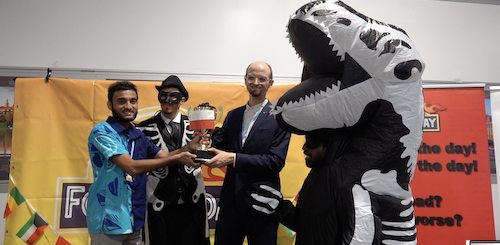
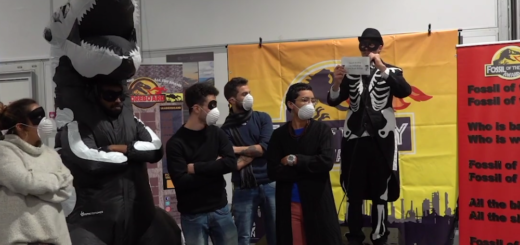
Cough, cough …. Did anyone else notice that strange haze in the air? … cough, cough … I suppose there issomething to be said for the way light reflects off the “clouds,” but really? Why are we at COP in a coalregion?

Polish President Andrzej Duda said yesterday during his speech delivered at COP 24 that there is no contradiction between climate protection and coal use. He also stated that Poland has coal reserves that will last for 200 years more. Then today, speaking at the Barbórka Academy of the Tauron Group, he stressed that the Polish mining industry and mining constitutes « one of the foundations of the Polish economy », determining the country’s energy security and are « to a great extent » a guarantee of its energy sovereignty. What a warm (or boiling hot?) welcome from the hosts of COP 24!

There is a stark contrast between his words and what science says – the recent IPCC report clearly states we have 12 more years to save the world and deliver on ambitious climate action. Meanwhile, the past four COP Presidents have been busy urging parties and stakeholders alike to send an “unequivocal message” from Katowice on the need to “enhance ambition by 2020 that puts the world on a trajectorycompatible with the objectives of the Paris Agreement,” pursing efforts to limit warming to 1.5°C.


... Read more ...

Sychronized Swimming

Have you ever watched synchronized swimming? Combining swimming, dancing and gymnastics; it’s considered one of the most complicated dances in the world. It can be done solo, duo, trio or in groups and it’s harder than most sports because it’s also under water.

For quite some time, negotiations around Article 9.5 of the Paris Agreement have felt like a pretty difficult dance. In 2016, it kept us working many hours into the night, and at COP23, ECO felt the outcome was out of step with what was necessary. Throughout the year, we always felt the operationalization of Article 9.5 was going to be a heck of a difficult maneuver at COP24.

Today, at the Head of Delegations meeting, ECO felt countries are finally progressing on one of the most basic rules from the artistic world: a good dance requires not only exquisite technique, but also a lot of trust in your partner. Like, for example, when the APA co-chair agreed with Canada: “we are listening to each other and trying to find solutions”. ECO hopes this rhythm flows further and would like to propose ideas on how this can lead up to a beautiful tango performance called substantial progress and full operationalization of Article 9.5 of the Paris Agreement:

  1. Contributor countries should agree to provide similar types of ex-ante information for every channel and source to ensure comparability and coherence when informing on the mobilization of climate finance.

... Read more ...

ECO 2, UN Climate Conference, Katowice, December 2018 – The Seeking Power Outlets Issue

Eco banner, 1024x357

Content:

  1. 12 Years Left
  2. A Step in the Right Direction
  3. Where There’s Smoke There’s Fire in Paradise
  4. Go For It Pedro!
  5. SBSTA is Just the First Step
  6. Ludwig: Seeking Space for CSO
  7. The “Bluffers Guide” to LULUCF
  8. We’ve Got A Question For You
  9. The Plaster of Paris: ECO’s Recipe for a Robust Rulebook
  10. Loss and Damage as a Separate Workstream of the GST
 … or read this ECO as a pdf

12 Years Left

Today, Parties will get to hear both the urgency of the crisis as well as the feasibility of achieving a 1.5°C pathway straight from the horse’s (or in this case scientist’s) mouth at the SBSTA-IPCC special event on the SR1.5. While ECO does not want to steal the IPCC’s thunder, ECO did want to highlight a few key points from the report.

The scale of the task is clear: the world needs to halve CO2 emissions in little more than a decade and achieve net-zero emissions by mid-century. This will mean a rapid phasing out of fossil fuels and a transition to a 100% renewable energy future. If the world were to follow the P1 pathway it would mean close to an 80% reduction in coal use below 2010 levels by 2030, with significant cuts in oil and gas are well. Time is of the essence for Parties to strengthen their NDCs and mid-century emission reduction development strategies, accordingly!

In terms of ECO’s question on how to respond to the SR1.5, ECO hopes that the SBSTA chair listens closely to the present by the IPCC and delivers as thorough a summary report as the Chair developed for the last SBSTA-IPCC special event held in May 2016. This report should feed into the Talanoa Dialogue and its outcome.

A Step in the Right Direction

On Monday, the World Bank released news of its post-2020 climate action, to cover 2021-2025.

The announced USD$200 billion is good news. Quite a lot of zero-carbon resilient-infrastructure building good news, in fact, and the Bank has doubled its existing climate finance commitment. The World Bank (minus the IFC) has also committed to 50% for adaptation. Did other MDBs hear that?

Who could complain about the newly-pledged efforts to support 36GW of renewables and 1.5GW of energy efficiency savings? Or helping 100 cities decarbonize?

It’s just that the Bank has failed to actually state a climate target, or even how much carbon savings all that money will aim to achieve. It has not promised to end funding fossil fuel infrastructure completely, either directly or through intermediaries, although its prior announcement to stop funding upstream gas and oil remains a very positive step. This remains a gaping hole in the Bank’s stated climate ambition.

Perhaps the simplest way to set a climate-ambitious target would be to pledge, as civil society called on them to do at their October annual meeting, that the World Bank will make ALL of its portfolio lending compatible with 1.5°C.

And please remember in the midst of all the joy surrounding the new announcement, that most of the money from the banks are loans that must be paid back — by the world’s poorest countries.