ECO Newsletter Site

A Just Transition Declaration by the Polish Government? Just Don’t Fake It!

The fact that the Climate Summit is being held in Katowice, the capital of the Silesia region – literally one of the last remaining coal mining regions in Europe, provides not only a symbolic setting for this meeting, but also raises a question at the heart of these negotiations: how can we phase out fossil fuels in time to limit warming to 1.5°C without affecting the people and communities whose jobs depend on them? A just transition – if managed correctly – can give us a pathway to a 100% renewable system while creating better jobs, a fairer future for all and a more equal society.

Today, the Polish government is launching a “Solidarity and Just Transition Silesia Declaration”.

It is hard not to read this declaration as a crowd pleaser without any intention to follow through with actions. Over the years, Polish governments have been systematically taking decisions that contradict their self-declared commitment to a greener energy future. Examples abound. In the Polish draft energy policy published just ahead of COP24, coal still counts for 60% of the national energy mix in 2030. Moreover, the government recently announced the construction of a new coal power plant in Ostrołęka by the state-owned energy company ENEA, despite the protest of ENEA’s labour union which demanded skipping investing in coal and going for renewables instead.
... Read more ...

We Need a Technology Framework That is Fit for Purpose

Dear delegates, Silesia remains one of the final refuges for an industry that needs to be consigned to the history books. The needed phase out from coal and transition to a 100% renewable energy future only serves to highlight the importance of environmentally and socially sound technology in ensuring that we effectively address climate change and limit warming to 1.5oC.

The Technology Mechanism is about more than just the limited technical assistance we see today. The new Technology Framework under the Paris Agreement must include support and finance for local technology innovation and not just support for new and emerging technologies from developed countries. Innovation and local design needs to be nurtured, and some failure needs to be accepted, if the right technologies are to be developed that deliver on 1.5oC and enable effective adaptation. Support must be based on need, however putting support into Technology Needs Assessments alone is inadequate and piecemeal, and will not deliver the technology that is urgently needed by the vast majority of developing countries.

Finally, the process must involve the private sector, but it mustn’t be designed only to meet their market needs. Everyone knows that the introduction of new technologies is initially expensive, and can require incremental adjustments to meet specific needs.
... Read more ...

Real Money, Urgent Action

The latest IPCC Report made it unmistakably clear: far more and better financial support is needed to adopt and implement urgent, rapid and transformational policies to hold global temperature rise to 1.5oC. Climate finance takes a lot of space in this year’s COP agenda and ECO hopes negotiators will make good and constructive use of the space they are given.

New assessments from the UNFCCC’s Standing Committee on Finance and the OECD indicate an increase in the overall level of international climate finance from 2013 to 2017 based on developed countries’ self-reporting. However, this increase continues to heavily favour the utilisation of loans and not grants, which, as we know, have to be paid back. According to the OECD data, the amount given as loans doubled, increasing from USD $20 to $40 billion between 2013 and 2017. In contrast, finance provided as grants only increased modestly from $10b to $13b. Reporting finance provided in nominal terms — and including flows through developed countries’ export credit agencies, as the OECD report does — does not reflect the actual support provided. A key piece of information missing in this report is the grant equivalent of all loan instruments. ECO wonders why this information is missing.
... Read more ...

Will the Polish Presidency Heed the Call?

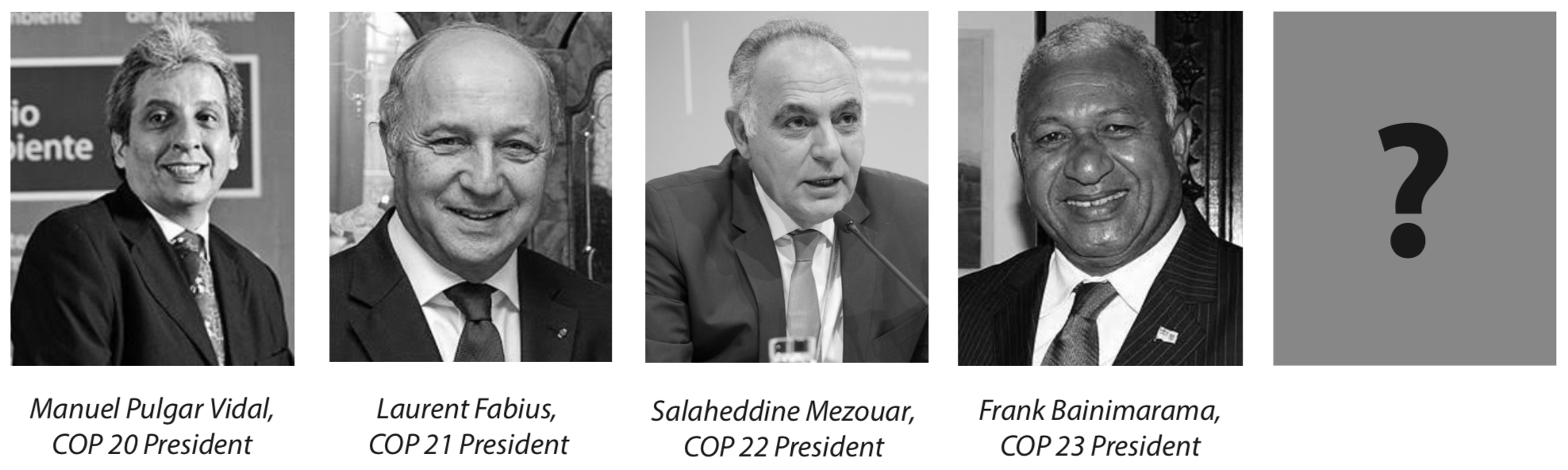
image-8476
ECO welcomes the call to enhanced action just issued by four former COP presidents (Laurent Fabius, President of COP21, Frank Bainimarama, President of COP23, Salaheddine Mezouar, President of COP22, and Manuel Pulgar Vidal, President of COP20).

They rightly note that « the world is at a crossroads and decisive action in the next two years will be crucial » and that « we require deep transformations of our economies and societies to build a better world for all. » They call for all of us in Katowice to « send an unequivocal message…for enhanced ambition by 2020 that puts the world on a trajectory compatible with the objectives of the Paris Agreement. »

ECO strongly hopes that delegates, ministers, heads of state — as well as the current Polish presidency –will heed this call over the next fourteen days, and give us the bold action the world so desperately needs.

Loss and Damage: The Missing Link or the Smoking Gun?

Loss and damage is the smoking gun of climate change. When super heated wildfires leave whole regions in California a smouldering ruin, super charged hurricanes and cyclones decimate countries in the Caribbean and the Pacific, and when cities in Africa are left counting the days of their remaining water supply, there can be no doubt that irreversible impacts of climate change are clear and present.

It is therefore little wonder that loss and damage was agreed to as an integral part of the Paris Agreement. It was, of course, a part of the political calculation of getting the Paris package. In fact, it was deemed important enough to include as a stand-alone article.

Fast forward to today where there are attempts to bracket it out of existence. Surrounding loss and damage with brackets isn’t the way to make it go away. Getting in a time machine and taking enough mitigation action 10 or 20 years ago is the only way it could have been avoided (Yes, this is ECO saying: “I told you so!”). Sadly, a lack of mitigation action — and an equally sad lack of adaptation finance — means that loss and damage is here to stay.

An explicit reference to loss and damage in Article 9.5, 9.7 — and the modalities, procedures, and guidelines (MPGs) of the transparency framework — is essential.
... Read more ...

In Loving Memory of John Lanchberry

Dr. John Lanchberry, CAN’s outstanding and much loved go-to expert on all things LULUCF, AFOLU and related topics left us on October 18, 2018. John’s quiet humour, warm heart, typically British unflappability and extraordinary patience with activists needing tutoring on these issues was legendary. John was a skilled negotiator, talented orator, knew everyone in the UN secretariat, the delegations, the NGOs – and had a special link to fellow smokers, meeting regularly in the conference smoking areas – where much ‘business’ got done.

In John’s honour, ECO would like to share a poem composed by one of his colleagues. May he Rest In Peace.

When I went along to my first major COP
When the list of new acronyms just didn’t stop
When my brain was full to bursting, I was ready to drop John was there

When I needed help developing a new NGO line
When I needed someone to tell me I was doing fine
When I needed a friend with whom to drink white wine John was there

When I was very nervous talking to the press
When the negotiations seemed one big mess
When I was actually struggling with stress John was there

When secretly pregnant with my first child
When NGO submissions still needed to be filed
When I needed reassurance, comforting and mild John was there

Now I’m sitting near his empty desk, tears in my eyes
I think of all he taught me, my friend so wise
All those memories, that knowledge, I realise John’s still there

Risky Business

ECO is worried about all the risky business we’re seeing as this session comes to a close! And we’re not talking fun Tom Cruise- slipping-around-in-socks risky business – we’re talking “oh god my tuk- tukisheadingstraightforthatothertuk-tuk”riskybusiness.Whilesome delegates may subscribe to the high risk, high reward approach to staking out their negotiating positions, we’re not so enthusiastic about this game of chicken that you may think you’re playing with each other – but you’re actually playing with the planet. As it’s also our planet on the line, here are what ECO sees as the greatest risks, and what can be done to avoid these possible collision courses:

If the Co-Chairs are given the mandate (which ECO strongly recommends – don’t get us wrong) to prepare a joint reflection note proposing text and ways forward, they will have a huge responsibility to be bold, as well as fair, in reflecting all parties’ views. Anything less than an even-handed approach will go down like a dose of “Bangkok belly” on day 1 of Katowice, and would inevitably lead to disagreements on whether the text should be adopted as a basis for negotiations. To avoid that disaster, the Note must include all parties’ proposals as options on the table – while also putting forward bridging proposals for possible landing zones on crunch issues.
... Read more ...

A Just Transition for Climate Ambition

In the run up to COP24 in the construction workers, farmers, is a guarantee for better policies Katowice there is a lot of talk about Just Transition. But what is it? Why is it good for the climate? Can you pronounce it without twisting your tongue?

Just Transition is about providing better and decent jobs, social protection, more training opportunities and greater job security for workers who are affected by climate change or the policies aimed at addressing it, their families and their communities. It’s about bus drivers, and others who have to work in soaring heat regardless of whether they live in Africa, Asia, the Americas or Europe. It’s about the women and men losing their jobs in fossil fuel industries, and it’s about providing decent and quality jobs in the renewable energy industry.

Just Transition happens when there is social dialogue between workers and their unions, employers, governments and other stakeholders. Social justice and broad civil support. Both are urgently needed to step up climate ambition. Recognising the importance of a Just Transition would send a very strong signal out of Katowice that Parties are ready to embrace this challenge. After all, it is actually easier to integrate the concept of a Just Transition in the guidelines – just as you did in the Paris Agreement – than to pronounce it in Polish: “consprawiedliwa transformacja”…

Stuck in the Middle with ICTU

Well, you started out so strong with a lot, but now you’re wondering what it is you should do… NDCs are a central pillar to of the Paris Agreement and it is of the utmost importance that we get comprehensive guidance for NDCs on APA agenda item 3. Features to the left of me, accounting to the right, here ECO is — stuck in the middle with ICTU. This guidance is essential to help countries understand each other’s commitments and will provide integrity as countries account for them.

We’re trying to make some sense of it all. But we can only come to one conclusion: progress under APA agenda item 3 has been bad this week. We were waiting for a breakthrough that would have allowed time for substantial discussions. But it never happened, and we’ve seen talks revert back to old dynamics. We now need Parties to pull together draft text reflecting the vision of the Paris Agreement, allowing its implementation and including all the elements of the preamble.

Time has been wasted and there is a clear lack of balance on progress of the Paris Agreement Work Programme. If we leave here with an impasse, we call on countries to come up with some bridging proposals to agree on the essential guidance that will inform them as they prepare to update and enhance their NDCs by 2020 and prepare to account for them in their reports.
... Read more ...