Categoría: Previous Issues Articles

Adaptation Fund: Progressive But Poor!

ECO would like to cast a bright light on whether there is sufficient progress in responding to the needs of the poor and vulnerable at an implementation level. We note that the Adaptation Fund is now established. It has approved funding for 27 adaptation projects with several projects more waiting to be funded. Furthermore, we see that 15 developing countries have already had their National Implementing Entities accredited and can directly access the Fund, and several more countries are in the process of accreditation.

ECO also recognises that the Adaptation Fund has become a forerunner, having recently been ranked as the top climate finance institution by Publish What You Fund: the Global Campaign for Aid Transparency. Just two weeks ago it became the first climate fund in the International Aid Transparency Initiative. It has also been an early-mover in adopting an overarching results framework. The Fund has managed to speed up the project approval process while reducing implementing entities’ fees.

ECO wonders why, with such accomplishments, the Adaptation Fund is the one multilateral fund that has received the least contributions from developed countries in recent years. And to make matters worse, the price for emission reduction certificates (the key income source of the Fund) is now below US$1, largely due to the virtual collapse of the European Emission Trading Scheme.
... Read more ...

Closing the Gap On Aviation and Shipping

This is the year for a fresh start in addressing emissions from aviation and maritime transport – those uniquely international sectors that have generated so much discussion and so little action over the years.

This year, the Assemblies, the highest bodies of both the International Maritime Organization (IMO) and the International Civil Aviation Organization (ICAO) are meeting for the last time before 2015. This will be their chance to make progress on these fast-growing sectors in the pre-2020 period, including by putting a price on emissions from ships and aircraft.

These sectors can make an important contribution to closing the gigatonne gap, both in the period up to 2020 and beyond. These sectors, which account for around 5% of global CO2 emissions, can contribute reductions of up to 0.5 GtCO2e. But perhaps more importantly, decisive progress in addressing these emissions can restore confidence in our multilateral institutions and demonstrate the collective global political will needed to make the transformative steps necessary to prevent a climate disaster.

What’s more, we cannot pass up the chance to use carbon pricing from these sectors as an innovative source of reliable and stable public climate finance for actions in developing countries, and in the sectors themselves, to supplement contributions from the budgets of developed countries.
... Read more ...

ADaPtation Is Important!

ECO listened carefully to yesterday’s roundtable on adaptation. The roundtable discussions brought forward new ideas and thinking on how adaptation can move ahead in the 2015 agreement in a way that adequately addresses escalating climate impacts.

There seems to be consensus that adaptation will be a key pillar of the 2015 UNFCCC agreement. Additionally, many Parties acknowledge that there cannot be a trade-off between mitigation and adaptation, and that without sufficient mitigation, many adaptation efforts will not be enough to cope with mounting impacts, and substantial loss and damage will thus be unavoidable. While these statements are welcome, ECO asks whether Parties will really deliver the required paradigm shift towards climate resilient development.

We are starting to see some “out of the box” thinking, and a recognition that the 2015 agreement provides additional impetus for action. As the delegate from Uganda so eloquently stated, 2015 needs to mark a watershed for implementation – building, strengthening and fully putting into practice the institutions launched in Cancun.

Ideas from delegates included the possibility of a global benchmark or goal for adaptation, as well as the need to stir up action by other international and regional processes on adaptation. The Marshall Islands set out how national legislative action on adaptation could be counted towards developing country commitments under the ADP (ECO of course assumes that these could not be traded against legally-binding mitigation commitments).
... Read more ...

Get Smart About PaperSmart

ECO looks forward to contributing to the success of the Warsaw COP and rejoices at being able to play its part once again contributing to the acuteness of the discussions. Since time immemorial (or maybe it just feels that way), ECO has tried to enrich each negotiating session. We look forward to a PaperSmart conference, but hopefully not so «smart» as to prevent ECO’s opinions and insights from reaching delegates searching for inspiration.CAN logo

Coal Barge and Solar Panels

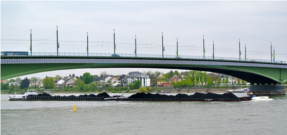
A coal barge and solar panels compete for attention beneath the Kennedy Bridge in Bonn earlier this week. ECO notes that, a few minutes later, the coal had disappeared, while the sun still shone on the panels...

A coal barge and solar panels compete for attention beneath the Kennedy Bridge in Bonn earlier this week. ECO notes that, a few minutes later, the coal had disappeared, while the sun still shone on the panels…

Only Fools DON’T Rush In (to a Low-Carbon Future)!

Sometimes in life it pays to be contemplative. One should do one’s research before buying a house (who wants to live in a flood zone made more vulnerable by climate change?) or getting married (imagine if s/he is secretly a climate sceptic or a bottom-up advocate!) or starting a family (OK, so maybe that doesn’t always happen, but you get ECO’s point). Considering options to increase the level of ambition, however, is NOT one of those issues. The options are clear. The task now is their immediate implementation.

The workshop on enhancing near-term ambition did highlight that many countries are moving forward with a wide variety of mitigation initiatives. This is very good. However, as we know, it is not enough. ECO was also pleased to see a number of countries referring to some very good ways to increase ambition, ranging from upping their pledges, to phasing out HFCs or fossil fuel subsidies, to reducing black carbon, enhancing energy efficiency, protecting our forests or addressing the emissions from international bunkers (hello ICAO assembly in September!). What upsets ECO is that countries have been talking about these options for a long time. ECO cannot imagine having to continue to talk about them all the way to Warsaw (and possibly beyond).
... Read more ...

Get To Work(shop)!

ECO is getting worked up by these workshops. On Monday, we heard several distinguished delegates mention the importance of participation. Well, ECO would like to raise your participation and call for interaction!

OK, so we’re being deliberately obtuse about what the distinguished delegate was referring to. Our “friends” from the brollies were actually setting up a dangerous dichotomy between participation and ambition, which is totally unacceptable. But for the moment ECO will let that pass (although you know we’ll come back to it!).

What surprised ECO was the re-articulation of well established positions in the initial workshop on scope and design. This is deeply disappointing. ECO urges parties to be brave; put creative ideas forward. Some will get flattened (like that frog!) but some will permeate. If you don’t ask you don’t get. ECO understands that years of disharmony make Parties nervous about revealing some of their thinking, but this is your time to shine. This is the year of conceptual ideas: we’re facing an unprecedented challenge, one that requires an unprecedented response. And in this new (to us), bright and transparent building, what better surroundings could there be for a more frank and visionary discussion?

We only have a few days here in Bonn, and ECO hopes that Parties have just been warming up before heading to the gym (i.e.
... Read more ...

You Can’t Feed Your Addiction and Break It, Too

While delegates will be discussing low emission development opportunities in today’s workshop, many of your countries are still feeding their tragic addiction to fossil fuels. You say you want to keep global warming below 2°C and to keep the door open for 1.5°C, but in fact you are consuming fossil fuels as if 4 degrees was the new 2 degrees.

The International Monetary Fund tells us that this addiction is costing your taxpayers USD 1.9 trillion each year in subsidies for the fossil fuel industry (FYI, for comparison, 1.9 trillion seconds is about 60,000 years!). As shown recently by the International Energy Agency, the result of this is a continuous rise of global carbon emissions each year, while we know that emissions should in fact peak well before 2015.

The archaic, continued support for fossil fuels means that they remain artificially profitable and that low carbon alternatives such as renewable energy sources and energy efficiency are emerging much slower than they could. Let’s be honest here: you are not aiming for a 2°C world. No, in fact you are undermining the development of these low carbon opportunities, which could create local jobs and steer innovation. Instead you line the pockets of the fossil fuel dealers and encourage them to invest further in a 4+°C future.
... Read more ...

On Equity: Part 1

ECO was positively surprised, during yesterday’s ADP2 opening and the following workshop, hearing Parties expressing the fact that equity can’t be neglected in the negotiations – a viewpoint that ECO shared long ago. Now that ECO and Parties have this common understanding on the importance of equity for the 2015 deal, let us suggest a way ahead: Parties should consider the equity spectrum approach.

Firstly, the core equity principles should be identified, such as the adequacy principle, CBDR+RC, the right to sustainable development and the precautionary principle. In the equity spectrum approach, the “equity index” would then be composed of a basket of more specific equity indicators. This basket would have to contain well-designed indicators that, taken together, measure both responsibility and capacity. It could include indicators for, inter alia, per capita income and standard of living, per capita emissions and historical responsibility, and domestic income inequality.

Once this basket of indicators is agreed, countries’ mitigation pledges could be measured against this set. This would create the basis for assessing pledges in terms of their adequacy for staying below 2°C and keeping 1.5°C in reach, and in terms of a fair and equitable sharing of the mitigation burden and atmospheric space.
... Read more ...

Raise the Bar or Stay Home

Even as CO2 concentrations are about to break the 400ppm threshold, fresh climate disasters are announced all over the planet, and carbon prices are collapsing because of lax targets on par with BAU, countries have apparently come to the UNFCCC ADP meeting in Bonn with nothing to offer. Developed countries seem to be looking off in the distance beyond 2020, with images of universal participation and bottom-up national pledges dancing in their heads. Mundane issues like what has to change in the next 6 years and 8 months to stay below 2 degrees are apparently the farthest thing from their minds.

Parties are in Bonn to get down to work on two tasks – raise pre-2020 ambition and craft the next legally binding agreement to reduce greenhouse gas pollution – potentially the most significant global treaty that will ever be negotiated. Delegates should be mindful of the fact that that your work this week and over the next few years will secure you a place in the history books. Whether the legacy you leave behind is positive or abysmal depends on your creativity, commitment, negotiating skills and sheer hard craft. In short, you will have to be prepared to pull out all the stops.
... Read more ...