Categoría: Previous Issues Articles

Like a job interview – uncomfortable but full of opportunities

We can see you’re a little nervous, jittery even.


During the first week of negotiations, APA item #5 on the enhanced transparency framework discussed the facilitative and multilateral approach to progress and whether the registered observers would be allowed to contribute and provide added-value to the process by posing questions to Parties.


ECO believes it’s important to allow observers to engage in the process and raise questions during the enhanced transparency framework process. ECO thinks there should be a space for observer organizations to reflect on Party submissions to provide another perspective in order to further promote transparency and to incentivize implementation and overachievement.


It will be like a super short job interview: just a few quick questions. We know that job interviews can be nerve-wracking and uncomfortable. But, there’s really no reason to shy away from it. Especially if it’s an opportunity to have a conversation with civil society and get to know each other’s perspectives  in order to build a basis for a long-term relationship.


Let’s begin with a few quick questions on your transparency reports. You will have already gone through the technical expert review and addressed questions from the other Parties. So what’s so scary about a few additional questions? We just want to know that you’re up to the task of climate action!

Water We Doing About Water

Dear negotiators, did you know that the answer to some of your troubles can be found in nature? Nature-based solutions such as restoring mangrove buffers in degraded coastal areas or preserving peatlands have the potential to solve many of our climate and water challenges, reduce vulnerability, and help us adapt to a changing climate.
Why focus on water at the UNFCCC? Water is essential to life and to meeting both our mitigation and adaptation goals and, on the eve of the Talanoa Dialogue, it is timely to think of ambitious solutions for interconnected problems. Water demand is set to increase in all sectors and rising temperatures are projected to further increase pressure on limited water resources. Over 90% of NDCs with an adaptation component already reflect the understanding that water will continue to be one of the major challenges to adapting to climate change: Yet, actions taken now and in the next decade are essential to ensuring that climate change adaptation and mitigation measures as well as climate finance promote positive outcomes for water resources. ECO need only to look at statistics to see the urgency of this. We have already lost around 70% of wetlands worldwide due to human activities.
... Read more ...

Addressing Ambition Through Just Transition

The Talanoa Dialogue is all about getting creative on how to close the ambition gap and ECO is full of good ideas. But one idea doesn’t require much creativity at all – all it requires is common sense: we are in a hole and it is time to stop digging.

Climate leadership is being redefined and climate leaders can no longer get away with expanding or financing new fossil fuel production and infrastructure. With the principle of common but differentiated responsibilities and respective capabilities and the need for a just transition in mind, there are a handful of wealthy producers that should be planning for a managed decline of existing oil, coal, and gas production to meet our shared climate goals.

Some Parties and institutions are farther ahead and have started tackling fossil fuel expansion, production, and its financing. From bans on exploration and expansion, to cutting off financing for oil, coal, and gas production – there is a growing list of policies that are starting to confront fossil fuels at the source. These first movers are recognizing that we need to tackle supply and demand if we are going to close the gap, and, much like the piano bar at the Hotel Maritim in days of yore, ECO suspects that this club will quickly become the place to be.
... Read more ...

Ludwig: Standing Room Only

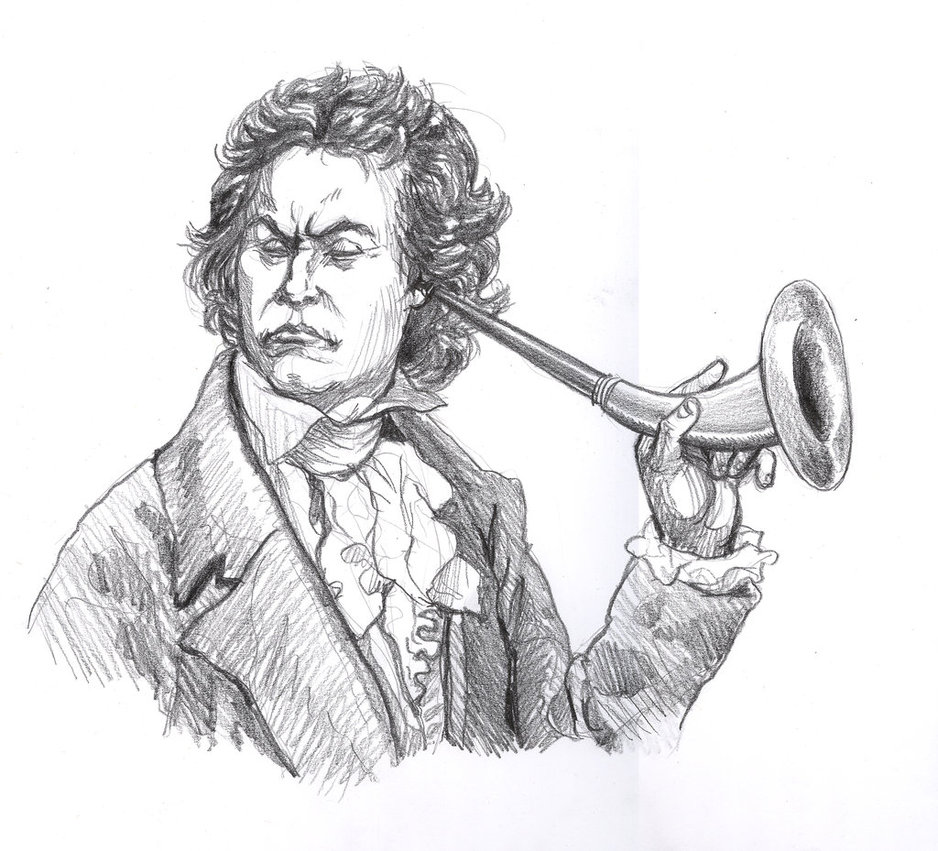
Ludwig is not only a fan of modern art, but also of the opera. While Ludwig enjoys watching the opera from the balcony, he didn’t bring his opera glasses to Bonn. Ludwig wonders why he and the rest of civil society must watch from the balcony when the floor seats remain largely empty. Did he miss the ticket sales? Ludwig wonders if it’s beca

image-8069
use Parties would rather see banner drops than speak with him face to face.

With a generous two-minute intervention to provide substantive input on a total of 49 agenda items (about two seconds per item!), Ludwig wonders where he can learn to sing fast enough to squeeze in valuable input to enrich the negotiations and foster progress. Perhaps a more comfortable alternative would be to allow Ludwig and his friends to make more interventions addressing specific issues in contact groups.

Ludwig also worries that not everyone has a ticket to the opera, which should be shared by all. With so many empty seats, he hopes the box office can throw open its doors and offer more just members only ticket sales.

IMO Joins the Mitigation Party

After 21 years of waiting and an almost doubling in growth of maritime greenhouse gas (GHG) emissions since the adoption of the Kyoto Protocol, members of the International Maritime Organisation (IMO) finally committed last month «to reduce the total annual GHG emissions by at least 50% by 2050 compared to 2008” while pursuing full decarbonisation in line with the Paris Agreement. The IMO’s submission to the Talanoa Dialogue (where’s yours, ICAO?!), is the first time the IMO and the shipping industry have bought in to serious mitigation target and formally recognised the shipping industry’s role and responsibility to help achieve the Paris temperature goals. Besides, the IMO’s 2050 target is an in-sector reduction commitment, and ECO acknowledges in-sector reductions as a crucial part of the implementation of the Paris Agreement.


Now that the self-congratulatory statements are over, it is time to get down to the hard work and agree on the emission reduction measures that will deliver the IMO’s belated “New Year’s resolution.” The IMO and its member states now need to decide not only how to cut GHGs but also how to address the impact of these cuts on the economies of developing countries, because the lion’s share of maritime emissions involve trade to, from or between them.
... Read more ...

Cross Cutting GST for Climate Ambition

In the GST negotiations, Parties have set themselves the task of better organizing their thoughts as currently captured in the co-facilitators’ informal document. One way of doing this would be through clarity on which issues should be dealt with in separate work streams, and which should be considered cross-cutting and thus should be dealt with under all work streams.


One clear example of this is means of implementation and support (MOI). ECO believes that MOI should not be siloed into its own workstream. MOI is issue-specific and therefore, MOI for mitigation must be looked at in the mitigation workstream, MOI for adaptation in adaptation, MOI for making financial flows consistent with climate resilience and low-GHG development in the financial flows workstream. Clearly, none of these issues can be considered in isolation from the MOI needed to enable them.


Best available science and equity (that’s equity between countries, not just procedural equity and other such things!) are other important cross-cutting issues. Each of the workstream issues has their own specific ways in which equity must be taken into account and it must therefore be present in each of these work streams.


Finally, while ECO thinks a dedicated workstream for Loss and Damage (L&D) could be a good idea to ensure that L&D is taken up by the GST, it may be a better idea to deal with it in a cross cutting manner as well.
... Read more ...

C the Difference?: CGE – CBIT

ECO, like all of you, wants a strong, robust, and flexible enhanced transparency framework.


One of the elements necessary for building a strong enhanced transparency framework is capacity building and the provision of support for it. A good number of programs, initiatives, and efforts currently exist to support developing country Parties prepare their national reports. As we transition to the enhanced transparency framework, capacity building support is essential to developing countries. Two current programs supporting developing countries in preparing their national reports are the Consultative Group of Experts (CGE) and the Capacity Building Initiative for Transparency (CBIT). Though, they both start with the letter C, they should not be confused!


CBIT was created only a couple of years ago and is now up-and-running. While, CGE has been in existence since 1999 and will expire soon, having been renewed for 2014-2018. As Parties debate renewing CGE, let us consider the form and function for each of them.

  CGE CBIT
FORM Consultative Group of Experts that assist developing countries with their reporting efforts under the convention. Capacity Building Initiative Transparency is a fund focussed on country projects.
FUNCTION Support the development of National Communications and BURs. This is done through international panels, webinars, trainings, training guides.

... Read more ...

Koronivia: Seeding principles and harvesting guidelines for climate action in Agriculture

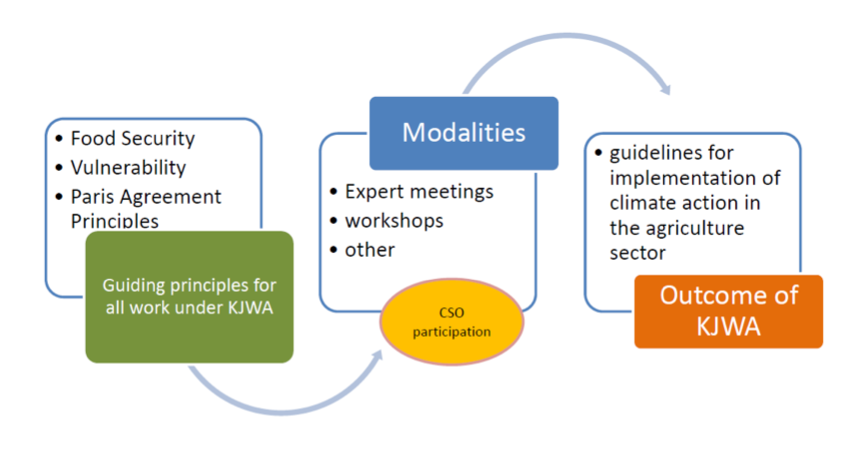
Parties have started to develop roadmap and timeframe to take forward Koronivia Joint Work on Agriculture (KJWA). Parties surely need no reminder that climate action under the Paris Agreement will kick off in 2020, and that agriculture will be one of the key components for many countries’ NDCs in adaptation and mitigation. To ensure that climate action really meets the goal of feeding people sustainably in a warming world, without undermining the 4 pillars of food security or peoples’ rights, ECO proposes that Parties remember to develop guiding principles through parameters. Clear expected outcomes should be defined, to help keep the KJWA process on track with the ultimate goal of informing climate action and NDCs in agriculture.


Parties should now decide on a structure to frame the 3 years of the KJWA. This is how ECO pictures it:

image-8058

Input to the KJWA process should be the core guiding principles, recognising food security, the vulnerability of agriculture and principles of the Paris Agreement preamble (food security, human rights including the rights of indigenous peoples, gender, ecosystem integrity, intergenerational equity, just transition and public participation). This should be agreed here at SB48, to orient the KJWA workshops and expert meetings.


At the end of the process, ECO hopes that the outcomes of the KJWA will include a set of guidelines for climate action in the agriculture sector, including NDCs.


image-8059

Racing Down the Path to 1.5°C Through Ambitious LTS

ECO was pleasantly surprised with yesterday’s country announcements on long-term strategies (LTS) during the opening plenary session of the Talanoa Dialogue. AILAC and the EU both clearly marked LTS as solutions for tackling climate change. ECO believes such strategies allow countries to structure what they’re going to do to tackle climate and outline how they’re going to do it, and so are key tools in helping countries to break the “ambition ceiling”.


What was missing though, were details on country-progress on developing their LTS, implementing them, and beefing-up the associated shorter-term measures used to achieve them, namely the NDCs. Without this, countries were essentially making “feel-good” announcements that have no merit and provide no certainty on their commitment to de-carbonise.


Fear not though, ECO is happy to share some tips on how to develop and implement a robust LTS and thereby maximise your country’s ambition.


ECO strongly encourages all Parties to develop and implement economy-wide LTS that are consistent with achieving the Paris Agreement goal of 1.5°C and the Sustainable Development Goals. It is imperative that a LTS is ambitious, includes clear timelines for phasing out fossil fuels, is legally binding (to avoid them being dropped by any less ambitious future governments that may come) and is regularly reviewed and revised upwards for compatibility with achieving 1.5°C.
... Read more ...

Ludwig: Equity is not a soup can.

Ludwig is well known to be a lover of modern art, especially of Andy Warhol, who famously said that “art is what you can get away with.” Consequently, he was delighted to see that Australia obviously sha

image-8060
res this love; they clearly had this quote in mind during the global stocktake informals yesterday. However, equity is not whatever you can get away with. In the context of these negotiations, it always means equity between countries (think CBDRRC and national circumstances), and thus equity in process. Participation alone is not enough for us to consider the stocktake as being conducted “in the light of equity,” as mandated by the Paris Agreement.