
Categoría: Previous Issues Articles

Renewable energy, we can do better

ECO spent yesterday, excitedly, following the renewable energy (RE) workshop – there’s a lot of activity in different countries and a global recognition about RE’s current and future potential.

Presentations from various experts made it clear that this potential is not being fully utilised though. We can double the potential of RE globally by 2030, as pointed out by IRENA, but there is lack of will.

Social gains from RE, like jobs and increased access to electricity, make the need to deploy it at scale an obvious approach. What was missing yesterday were the concrete actions and decisions that the UNFCCC can take to act on this this potential.

Maybe this lack of discussion came down to a scheduling issue, but with limited time ahead Parties should always bear this question in mind. We await the inevitable conclusion that UNFCCC led action is needed to accelerate the deployment of RE if we’re to close the gap.

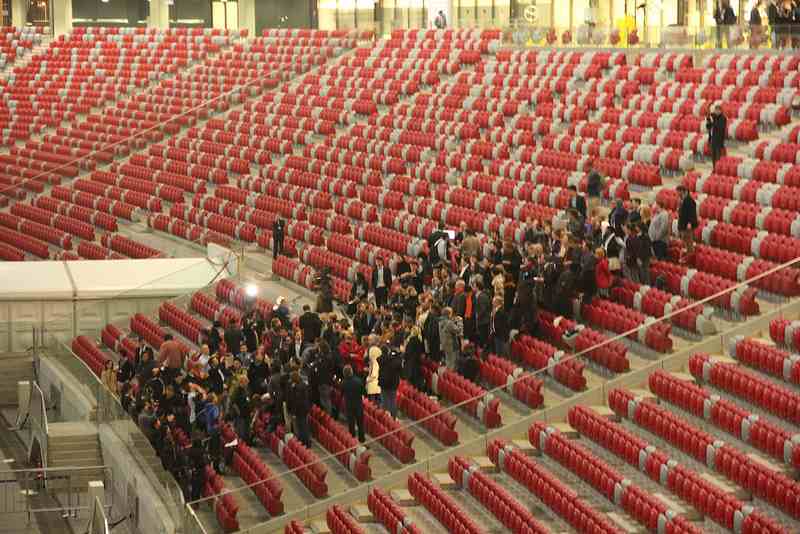
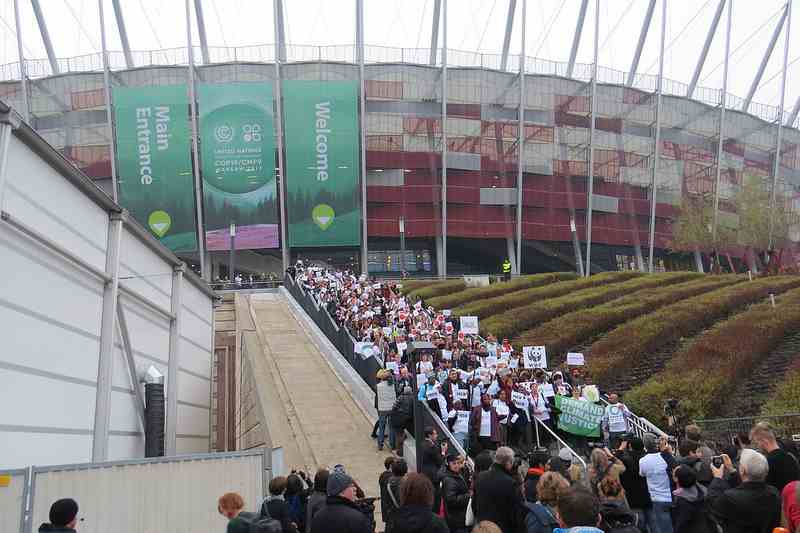
Is this the Japan of today or yesterday?

Today marks the third anniversary of the Fukushima nuclear accident in eastern Japan. Our hearts are with those who suffered and are still suffering from this tragic event.

ECO has no doubt that producing a new energy and climate vision is a hard ask. Yet, as we watch the Japanese government struggle with this task, we found ourselves deeply disappointed in Warsaw when when we heard that the government decided to lower its ambition with emission reductions for 2020.

We are now, again, worried to hear that Japan’s new energy strategy may not include ambitious targets for renewables and energy efficiency. With with no ambitious climate policies or targets, we’re not surprised, at ECO, to hear that there’s unlikely to be any discussion on the post-2020 commitments.

Three years on from Fukushima, Japan is about to present their new vision and we want to know what’s changed?

Outside of Japan, people were moved by the integrity shown by the Japanese, especially given what was happening in March 2011. It would be extremely disappointing to people both in and out of Japan if the, soon-to-be revealed, energy and climate vision presented falls short of expectations and is just a continuation of business as usual.

ECO’s 1-2-3 for Parties at this ADP

Has the extreme winter weather that’s gripped North America, the devastating flooding in the UK or the [insert your own top-of-mind climate-related disaster here] made a case for more ambitious action with you and your Party yet? If not, the release of Working Group II’s 5th assessment report on climate impacts at the end of this month surely will. ECO has long said 2014 must be the year of ambition, so let’s start off on the right foot and make the most of our five days together in Bonn.

There are 3 tasks this ADP session must deliver on to ensure that a draft text is developed by Lima and that countries come to the Ban Ki-moon Summit with ambitious pledges for Paris to close the gap in the near-term.

EIN: Agree on the structure and process for developing a draft negotiating text for this year. We all know what building blocks will form the basis of the deal in Paris — mitigation, adaptation, finance, technology and capacity building — but now it’s time to get into the specifics. It’s imperative that critical elements, like the legal architecture for the 2015 agreement including the compliance regime; an MRV framework that will ensure transparency and environmental integrity; a review mechanism to ratchet up ambition over time; and progress on fleshing out the loss and damage mechanism agreed in Warsaw, not fall off the table.
... Read more ...

Cheers to the Technology Executive Committee!

ECO has noticed with great appreciation that the Technology Executive Committee (TEC) is continuing to move towards greater transparency. Ever since its inception 2 years ago, the TEC has laid the foundation for transparency with their adoption of webcasting and inclusion of observers in thematic dialogues. In the meeting that just ended last week, the TEC outshone its own record of inclusiveness by inviting BINGO; RINGO; ENGO; and IGO observers to take part in many of the thematic task forces. To boot, the secretariat will begin to post notes of the meetings on the TT: Clear website.
ECO toasts the TEC members and secretariat, especially Chair Gabriel Blanco and Vice-Chair Kuni Shimada, for their insightful leadership. Congratulations TEC – cheers to you!
Other thematic bodies, you’re invited to follow suit.

Let’s imagine a better future for all

ECO often wonders how negotiators explain how they spend their time in Bonn. Do they go home and talk about the shopping in Bad Godesberg, the exquisite combination of German bratwurst and Pilsner, or how they ingeniously prevented agreement on binding commitments and successfully deflected pressure on their country to take action and prevent a climatic disasters?

Just imagine if, for once, we could all go home and enthusiastically announce that we had taken concrete decisions to support expanded deployment of renewable energy (RE) and energy efficiency (EE) technologies. Both of these things will deliver low-cost clean energy for households, create ecologically sound jobs, and ensure a livable world for our children.

All of this is what’s possible in Bonn at the ADP alongside exploration of technological solutions with high mitigation potential. This has the potential to demonstrate that the UNFCCC can deliver results, and maybe also encourage negotiators to be more willing to make more difficult decisions on other political issues elsewhere in these halls.

As Parties prepare for the technical workshops, ECO suggest that they bear the following questions in mind:

  • What specific decisions can the UNFCCC take to accelerate and expand existing initiatives on RE & EE that are proving to be effective?

... Read more ...

ADP: Get the Job Done


Last night, negotiators completed comments on the second version of the ADP co-chairs’ proposed decision text and draft conclusions. The co-chairs did a skillful job of focusing the discussion on paragraph-by-paragraph textual comments, with only the occasional excursion  into recitation of well-known talking points.

It’s clear there are still sharp differences amongst Parties on several issues. The co-chairs’ task now is to capture compromises in the new version of their text this morning, and then try to resolve as many remaining differences as possible before sending their proposed decision and conclusions to the COP. That will leave Ministers with a handful of issues to address.

On the 2015 agreement, it’s essential that Parties agree here in Warsaw on next steps in the process, including beginning work on a draft negotiating text at the ADP’s next session in March in Bonn, and reaching agreement on the information that Parties should provide in their proposed post-2020 commitments no later than the second ADP session in June.

Those proposed commitments should be submitted by Parties in 2014 in order to enable a full and transparent review and allow for upward revisions in ambition by COP 21. The scope and focus of the review process should be agreed in advance of the submission date, so Parties know how their proposals will be judged against each other in terms of equity and fairness, as well as how far the aggregate gets to the 2°C goal.
... Read more ...

Finance COP – or Finance Flop?

Those who expected high-level guidance from the eagerly expected ministerial finance dialogue certainly did not get it.

There were a few notable exceptions: Adaptation Fund pledges, a few constructive interventions, and some stark reminders of what is at stake. But on the whole, it was a dull string of speeches devoid of content, much less actual offers of finance.

Yesterday, negotiators were stuck over the Green Climate Fund and whether it should run empty for another year. These decisions are political, and ECO suggests that ministers dip into their ambition reserves for that purpose.

Concerning the promise of finance increasing to US $100 billion a year by 2020, there are four concrete outcomes that would help pave the way:

* Increase trust in promises made.

* Increase finance for adaptation.

* Increase predictability.

* Increase political attention.

In the remaining hours, there is one last chance that a greatly strengthened effort on finance could restore the promise that this would be the Finance COP.

Progressing the Adaptation Agenda

Negotiators made progress here in Warsaw on various adaptation issues. We have a decision on the next phase of the Nairobi Work Programme. Negotiators also worked hard on expanding the National Adaptation Plan process through technical and financial support.

It’s also good that the work of the Adaptation Committee was acknowledged, and we expect that enough resources will be provided to implement the 2014 work plan. But perhaps the next Annual Adaptation Forum could be less of a self-congratulatory talk-show.

Negotiators also worked hard on Loss and Damage. The establishment of an effective international  mechanism would be a major accomplishment for Warsaw (but let’s remember ‘effective’).

There is welcome news of achieving the US $100 million fundraising goal for the Adaptation Fund. But it should not have been so difficult to achieve, given the pioneering work and effective performance of the AF.

Much more needs to be done to establish confidence that the $100 billion will be delivered by 2020, as public finance is required to trigger the necessary scale of action.

When Parties bring bold pledges to the climate summit in New York in September (let’s remember ‘bold’), this should include substantial money for the Green Climate Fund and other instruments allowing adaptation to be scaled up rapidly.
... Read more ...

Technology: A Good News Story

Yesterday UNEP Executive Director Achim Steiner declared with much relish that the Climate Technology Centre and Network (CTCN) will begin to accept requests from developing countries for support for technology transfer on December 9. The full operationalization of the Technology Mechanism now emerges as the good news story of COP 19.

But the question arises: does the submission of requests from developing countries make the Technology Mechanism truly fully operational? For those who can’t stand the suspense, here are some suggested enhancements.

Global Technology Action Plan: How will the TEC know that it has dug deep enough and focused on the right technologies? A Global Technology Action Plan (TAP) platform should be developed and implemented by 2015. It could offer portfolios of optimized plans and help assess technology choices and enablers. The platform would, in effect, translate emissions pathway scenarios into corresponding Technology Action Plans that countries could choose to implement.

Technology Assessment: The terms of reference of the TM describes the transfer of Environmentally Sound Technologies (ESTs), but it fails to describe exactly what “environmentally sound” means. This should not include radical and potentially dangerous solutions like extreme genetic engineering, massive biomass burning and carbon capture, or geoengineering technologies that are potentially threatening to the planet.
... Read more ...