Categoría: Previous Issues Articles

Want concrete deliverables from WS2? Switch to RE and EE now!

In the TEMs followup meeting yesterday , ECO was reminded of the need to move beyond never-ending discussions into concrete action under Workstream 2. It also appears that the areas where Parties show the greatest interests are renewable energy (RE) and energy efficiency (EE). In their Technology Needs Assessments (TNAs), Parties have also expressed their priorities for mitigation technologies, and guess what? They begin with EE and RE. The science tells us that to limit global temperature rise to below 1.5°C, we need to phase out fossil fuels by 2050 and phase in 100% RE as quickly as possible. This means that in the pre-2020 period, we should be rapidly scaling up RE to at least 25% globally, along with doubling the rate of EE.

It just so happens that RE and EE are the two issues that have been most thoroughly analysed throughout the TEMs. Being armed with a good understanding of the policies that are needed for a rapid scaling-up of these approaches marks a potential turning point for transforming understanding into action.

In a Workstream 2 decision, Parties should explicitly call on the GCF and other international funding institutions to prioritise, within their mitigation windows, investments in tried and tested policies that promote sustainable renewable energy and energy efficiency.
... Read more ...

Turn Back Japan: Don’t Go From Nukes To Coal

The tragic Fukushima nuclear accident showed the world how dangerous and unsustainable nuclear technology is. As affected people continue to suffer, it’s clear that nuclear is not an option for the Japanese people any more. ECO was encouraged to see the rapid expansion of renewable energy since the disaster thanks to the feed-in-tariff introduced in 2012. The focus on energy efficiency by individuals and companies also proves that there is still plenty of potential for energy efficiency improvements in Japan. That’s why ECO is astounded by the news that there are now plans for the construction of 25 new coal-fired power plants (totalling 13,640MW) between 2016-2027. They would emit more than 82 Mt CO2 per year. Shockingly, most of these plans were conceived after the Fukushima accident, and it is expected that more plans will come.

Energy transition is an urgent need in all countries, and it is key to get the direction of the transition right, Japan! Hint: when we talk about energy transition we are talking about transitioning away from, not towards, high-carbon technology. Coal a the dirty fossil fuel. The IPCC warns that if we don’t shift investments away from high-carbon infrastructure, future emission reductions will be difficult.
... Read more ...

From faith-based organisations

Faith-based organisations (FBOs) have increased their engagement in climate advocacy since forming an inter-faith caucus at COP14. As the Parties negotiate the 2015 agreement, faith movements are carefully watching the process.

Churches, mosques and temples are at the frontline of disaster relief services: helping to bury the dead and console the grieving. People turn to places of worship for safety, support and emergency services. FBOs are reporting soaring emergency expenditures and they feel a duty to be involved in climate crisis prevention. They argue that climate justice should be understood as part of a broader agenda of justice, peace and meaningful quality of life. Drivers of climate change are also related to the causes of other types of suffering.

FBOs are concerned that the UNFCCC process has shifted from the core mission of the United Nations. From the upholding of human rights, promotion of peace and security, these values seem to be morphing into competitive self-interest. Perpetrators of harmful climate impacts show no remorse, and the emerging economies are fiercely insisting on the right to the same harmful development pathway. As the Roman Catholic member of the FBO caucus noted, this is akin to the story of Cain and Abel: just as Cain kills his own brother, countries’ failure to address climate change threatens to harm all members of the human family.


ECO’s invitation to you

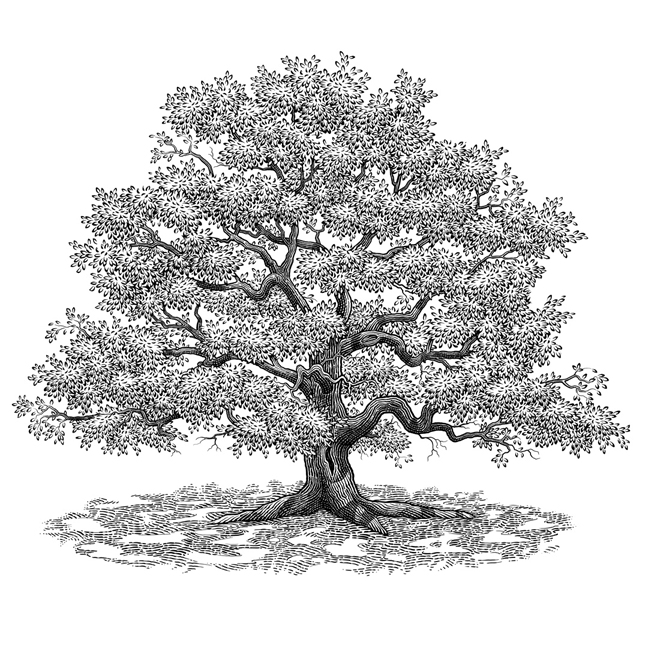
Tree
image-4227

ECO welcomes you to the UNFCCC tree planting ceremony to celebrate CAN turning 25 at 13:00 outside today. There will also be a plaque unveiling. All are welcome to attend.

ECO asks, if you were a tree, what kind would you be?

The “5” is just about the difference between 9 and 3.9

Delegates with long memories (and probably more than a few gray hairs) will recall the Article 9 review. Initiated, as the KP requires, at CMP2 in Nairobi, the review failed to achieve much of note. Its second iteration, in Poznan, failed to agree to any further substance. Does anyone even remember whether it led to a third review?

In contrast, the Article 3.9 review led to agreement of commitments for the second commitment period of the Kyoto Protocol, inscribed in Annex B to the KP (as required by the article).

The mandates in both articles defined the “who” (Parties) and made the legal requirement strong (“shall”). “When” was defined clearly for both, but the key difference was in “what” each review was to achieve.

The Article 9 mandate did not define what exactly “what” was to be achieved, and what action would need to be taken as a result of the review. In contrast, Article 3.9 was clear that its requirement was to establish “commitments for subsequent periods” which would be included “in amendments to Annex B”.

Why is this relevant to what needs to be agreed in Lima?

Some Parties are still under the impression that a 10-year commitment period with a vaguely defined review in the middle can hope to raise ambition, forgetting that such reviews, like Article 9, have a poor record of achieving further action.
... Read more ...

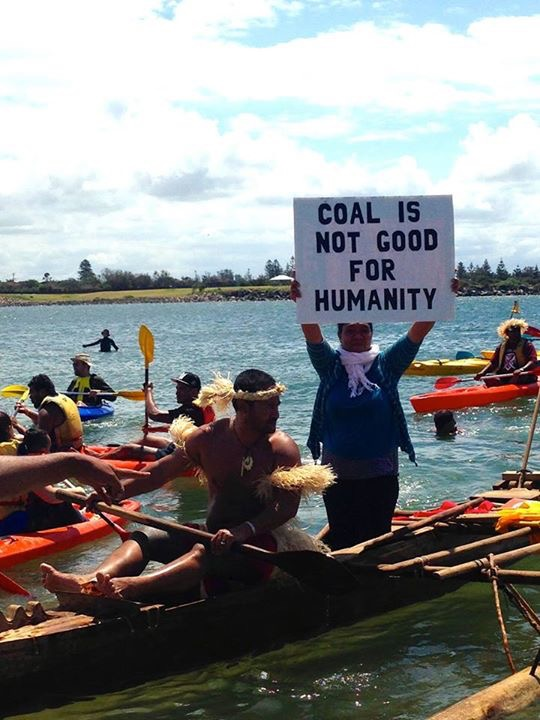
Coal is not good for humanity

As global Reclaim Power week comes to an end, Pacific Climate Warriors have blockaded  Australia’s largest coal port on the other side of the world. If it were a country, the coal  exported from this port would make it the 9th highest emitting country in the world.
image-4211

As global Reclaim Power week comes to an end, Pacific Climate Warriors have blockaded
Australia’s largest coal port on the other side of the world. If it were a country, the coal
exported from this port would make it the 9th highest emitting country in the world.

If you love me, make it official

ECO fought alongside many of you to win a second commitment period for the Kyoto Protocol. Whilst it’s not all that we wanted and it’s a shadow of its former self, it still has some valuable elements worth keeping alive in the international climate system. The international rules-based system and its common MRV system, alongside its common land use accounting rules, common base year, common sectors and gases, common commitment period (of five years) all aid transparency and understanding.

But the second commitment period still languishes in legal limbo. Not enough Parties have signed on. In fact, only 18 countries so far have ratified the amendments, with only one of them being a developed country. Until at least three quarters of Parties have done so, KP CP2 will not be legally binding.

ECO hopes that others will follow the lead of these 18 Parties and ratify, showing their public support for the important rules-based system embodied within the KP.

Equity: a pathway to ambition and sustainable development

ECO has done some late night soul searching and come to the conclusion that the Paris agreement will have to be fair if it is to achieve the extremely high ambition that the science demands. Equity is not just the pathway to ambition; it is also the pathway to survival. As ECO has concluded, and as you know in your heart of hearts to be true, to be fair the new agreement will have to actively promote sustainable development, facilitate poverty eradication, protect livelihoods, and promote robust adaptation solutions even as it facilitates the rapid and more or less complete elimination of carbon emissions.

It will simply not do to say that equity is a matter of opinion. The pre-Paris assessment of the adequacy and equitability of INDCs needs to be based on the Convention’s equity principles of adequacy, CBDR+RC, and equitable access to sustainable development. In case Parties are wondering how to operationalise these high-level principles, ECO suggests these five core indicators that together can do the job quite nicely: adequacy, responsibility, capability, sustainable development need, and adaptation need.

Equity and adequacy reviews must be an integral part of the new agreement, so that in each commitment period contributions are finalised only after a robust, science-based Equity Review.
... Read more ...

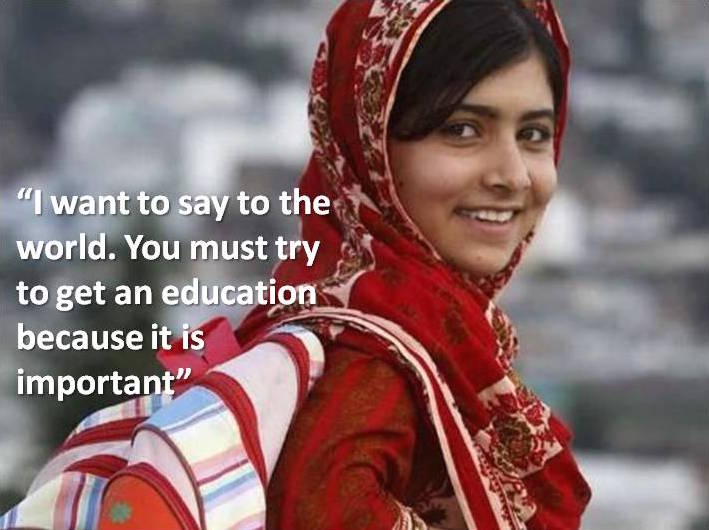
“You must try to get an education!”

Malala Yousafzai is the youngest-ever Nobel Prize recipient (2014). She is known mainly for human rights advocacy for education and for women.
image-4215

Malala Yousafzai is the youngest-ever Nobel Prize recipient (2014). She is known mainly for human rights advocacy for education and for women.

Dear negotiators,

You may have noticed that ECO loves a good homework metaphor, and this should give you insight into how we feel about education: we love it. This makes Article 6 a very close issue to our well-schooled heart. Imagine our delight in scrutinising over the latest batch of submissions to discover those from Dominican Republic and Belize, Benin, Burkina Faso, Chile, Costa Rica, Colombia, Fiji, Guatemala, Haiti, Jamaica, Malawi, Maldives, Marshall Islands, México, Palau, Panamá, Peru, Philippines, Saint Lucia, Trinidad and Tobago, Uganda, and Uruguay highlighting the importance of education, access to information and public participation.

These issues deserve to be in the preamble of the new agreement. A commitment to strengthen climate change education, access to information and public participation at home and internationally is worthy of all of our attention.

ECO also suggests that delegates look further afield to the UNESCO Global Work Programme on Education for Sustainable Development (ESD) for more suggestions.