ECO Newsletter Blog

Indigenous Peoples’ Caucus

ECO is happy to share this part of our platform with the Indigenous Peoples Caucus to help amplify their voice. 

Kia ora, bula, tabea, buorre beaivi, ya’ateeh, Indigenous greetings to you all.

With everything that is on the line this year, with these negotiations and the push by countries to accept a bad agreement, rather than taking the appropriate consideration to ensure a strong Article 6 outcome that protects the rights of structurally oppressed peoples, we are very pleased to announce that as Indigenous Peoples’ Caucus we have been granted a dedicated space in this daily ECO Newsletter to share the issues that are most important to us, and our communities.

The people who are affected first and worst by climate change have also continually presented the appropriate holistic solutions for the climate crisis we are all in. Indigenous Peoples, Disabled Peoples, Women, LGBTQI+, Global South, and Youth are on the frontlines combating climate change within our own communities, and we are here contributing the MOST to a fair COP25 outcome for ALL.

Indigenous Rights, Disability Rights, Women’s Rights, LGBTQI+ Rights, Youth and Children’s Rights are ALL Human Rights, and this is our red line. 

While people with lived experience must be centered and supported to lead across all COP25 workstreams, there is also a huge role for our allies to play. 
... Read more ...

Natural ecosystems: a Real Solution to the Climate Crisis

The huge forest fires raging across many countries send a clear signal — we need to keep our natural ecosystems intact or risk losing the fight against the climate emergency. Indeed, the IPCC 1.5 report was unequivocal: we cannot keep global warming below 1.5°C without tackling the crisis facing nature. ECO notes the buzzword “nature-based solutions” is flying around, looking to collect sweet nectar from fruitful coffers, and pollinating colourful blossoms galore. But we also note that the term “nature-based solutions” lacks clear definitions or criteria and can include activities that do nothing to advance real climate solutions. This has prompted ECO to take the opportunity to use specific language on the role ecosystems play in addressing the climate crisis, and how they can be protected and restored to achieve emissions reductions, enhanced resilience, and biodiversity protection:

  1. The role of ecosystems in climate ambition is not an excuse for greenwashing or continued BAU — we must keep fossil fuels in the ground at all costs.
  2. We need to prioritise the protection and restoration of our natural ecosystems, including primary forests and other intact ecosystems and those still rich in carbon and biodiversity. They are irreplaceable for stable carbon storage and for biodiversity, and we simply cannot afford their continued loss or degradation.

... Read more ...

Climate Finance Reporting QUIZ

Climate Finance Reporting QUIZ

Think you know all about climate finance? Think you understand what’s at stake in new rules for reporting?  Take ECO’s TRUE or FALSE quiz to find out…

Close to 60% of all climate finance in 2017 was in the form of loans -> TRUE

And not only that, loans which amounted to US$39.9 billion in 2017, were mostly counted at full face value, ignoring interest and repayments. New common reporting tables in the Common Tabular Format  (CTF) must mark a break from this practice of over-reporting by including a column for the grant equivalent of climate finance alongside its face value.

Only genuine climate action is reported as climate finance -> FALSE

Current rules allow for gross over-estimation of the climate relevance of funds, especially where climate change is one part of a broader project with multiple objectives. At the worst end of the spectrum, some countries (including Japan, Iceland and Greece) are counting the climate component of these projects at 100% of the project budget. New CTF tables must guard against this by including a “climate specific” column, a “full project value” column, and a requirement that parties set out their methodology for calculating these separate amounts.

All parties agree the Common Tabular Format should be common -> FALSE

ECO is scratching its head as to why some are proposing parties be allowed to delete columns and amend tables to suit their own reporting preferences.
... Read more ...

Natural ecosystems: a Real Solution to the Climate Crisis

The huge forest fires raging across many countries send a clear signal — we need to keep our natural ecosystems intact or risk losing the fight against the climate emergency. Indeed, the IPCC 1.5 report was unequivocal: we cannot keep global warming below 1.5°C without tackling the crisis facing nature. ECO notes the buzzword “nature-based solutions” is flying around, looking to collect sweet nectar from fruitful coffers, and pollinating colourful blossoms galore. But we also note that the term “nature-based solutions” lacks clear definitions or criteria and can include activities that do nothing to advance real climate solutions. This has prompted ECO to take the opportunity to use specific language on the role ecosystems play in addressing the climate crisis, and how they can be protected and restored to achieve emissions reductions, enhanced resilience, and biodiversity protection:

  1. The role of ecosystems in climate ambition is not an excuse for greenwashing or continued BAU — we must keep fossil fuels in the ground at all costs.
  2. We need to prioritise the protection and restoration of our natural ecosystems, including primary forests and other intact ecosystems and those still rich in carbon and biodiversity. They are irreplaceable for stable carbon storage and for biodiversity, and we simply cannot afford their continued loss or degradation.

... Read more ...

Fossil of the Day

The US and Russia

Looks like the US and Russia share more than the ability to bully other countries, rig elections, and lead in climate-wrecking oil and gas production! They want to make loss and damage weak again

The US gets the fossil for opposing that money reach vulnerable communities through the Warsaw International Mechanism (WIM) for Loss and Damage, to deal with climate change impacts, which Uncle Sam has helped cause by being a massive polluter.

Russia gets to share the fossil award with the US for having the chutzpah to try and throw out human rights and gender from the loss and damage negotiations.

The US folks seem to have a very short memory. They’re forgetting that waaaay back in 2013, countries agreed to “enhance action and support, including finance” for loss and damage via the WIM. 

And Russia, come on! A record of human rights abuses both at home and blatantly at the international level? This is an overdose of bad vodka! You cannot revoke people’s right to life, to a home, and to education, with a stroke of a pen.

Hey Russia, if you don’t understand how gender, human rights, and climate are related, maybe you shouldn’t be part of this conversation?
... Read more ...

Paperless COP?

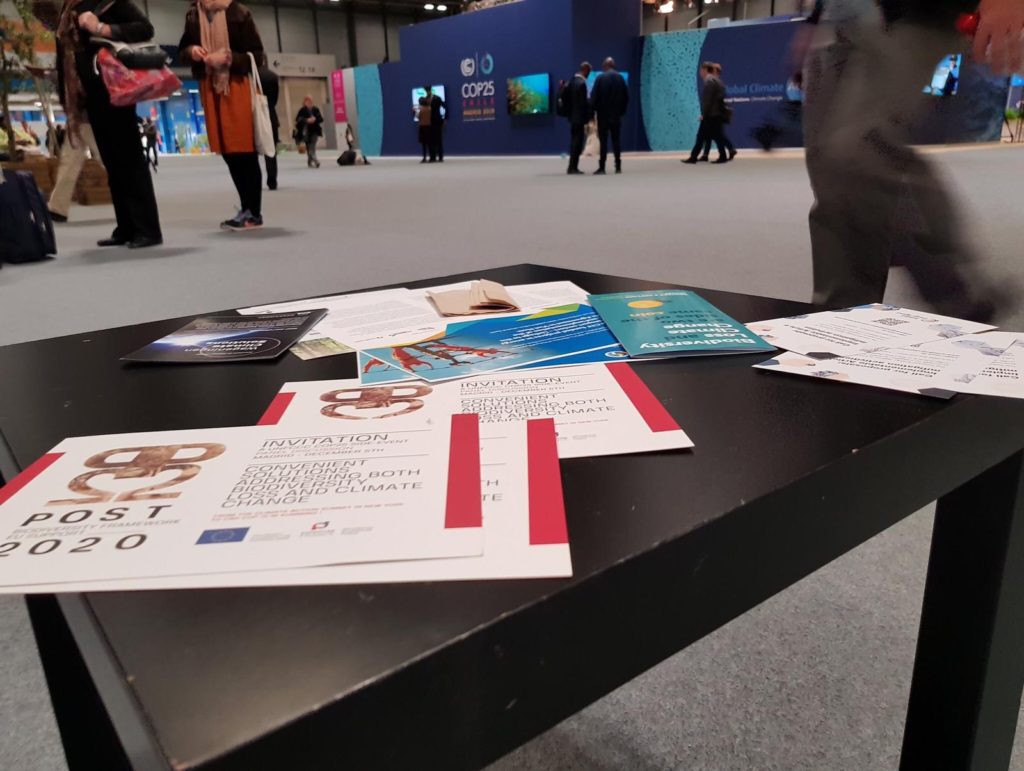
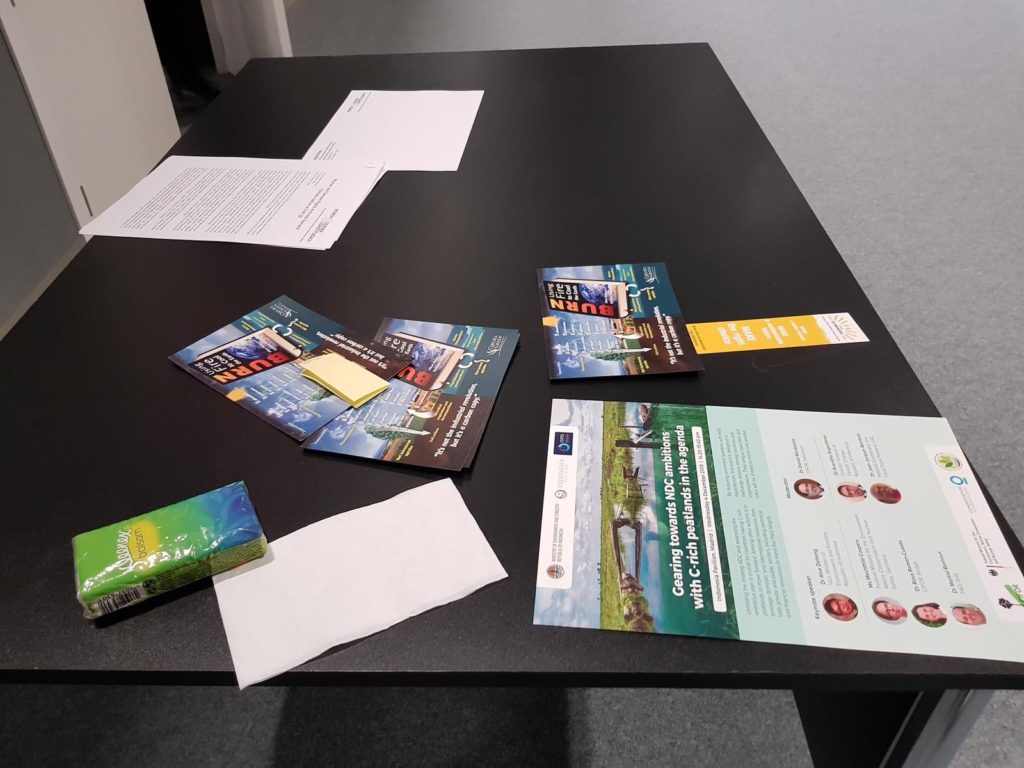
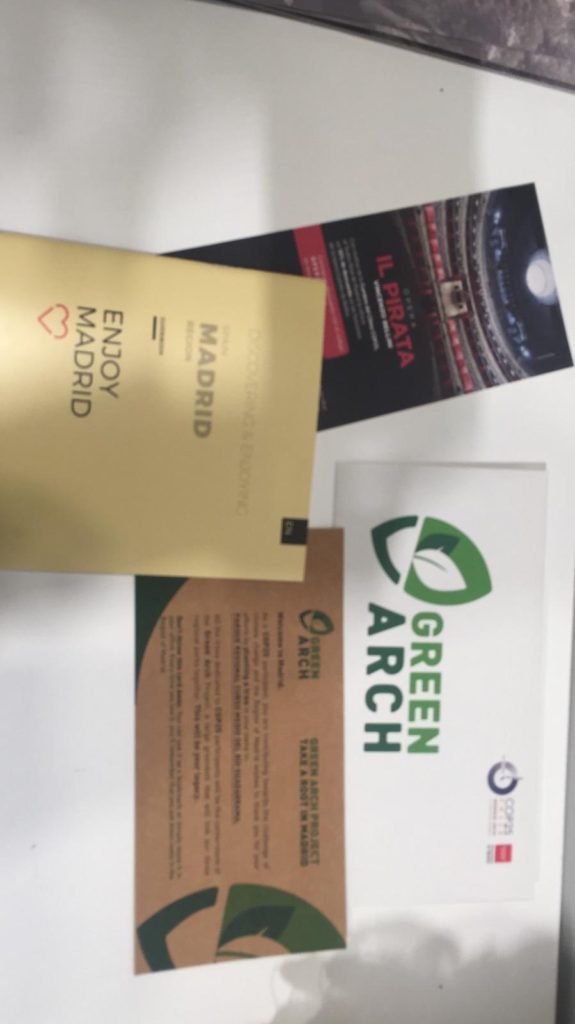
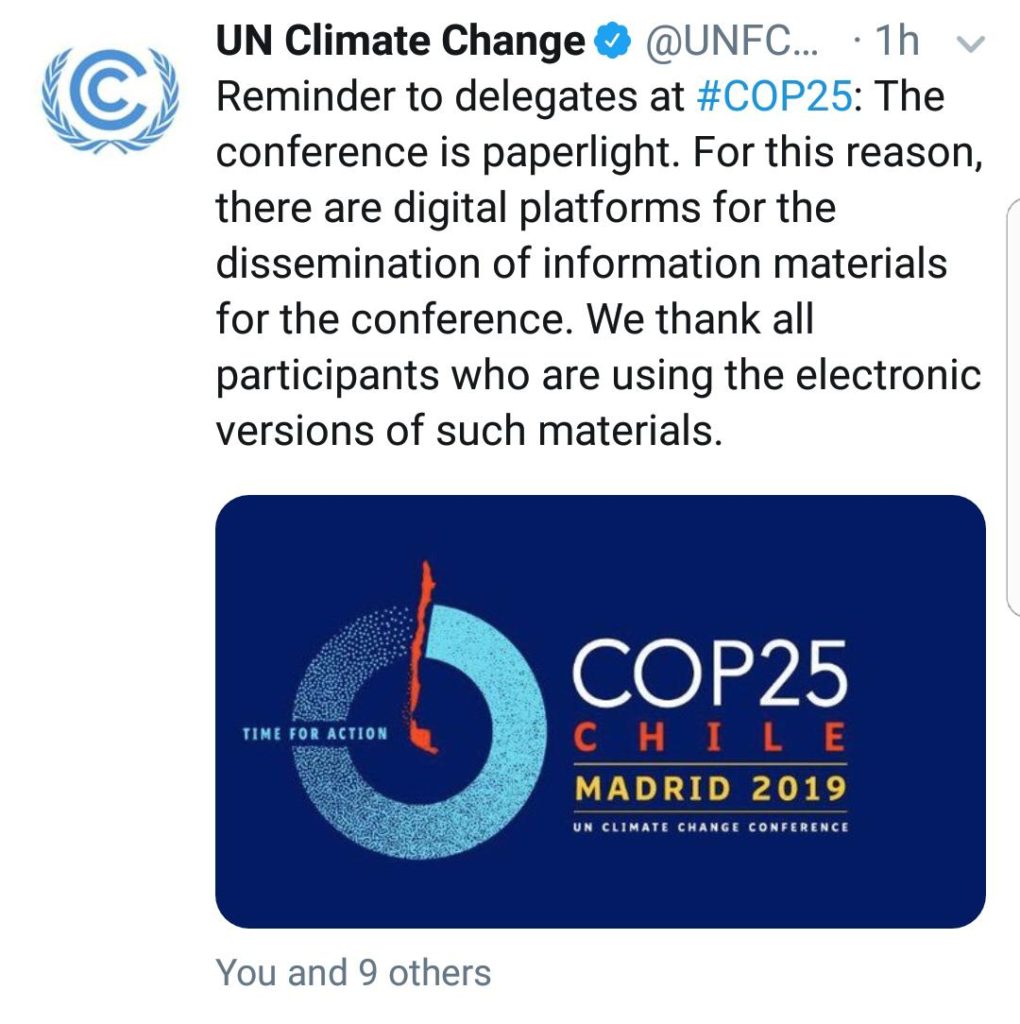
ECO has been banned from COP because it is «paperless».  Sneaking into the venue and walking through the halls, ECO saw people handing out paper flyers about upcoming side events, paper-wrapped chocolate, and glossy papery brochures. The conference venue exhibits and delegation spaces are piled high with papery materials for distribution. In fact, the only two publications not allowed in the now «paperlight» COP are ECO and the Third World Network Bulletin. How very strange. ECO is very sad about this. We would like to come back into the cosy COP venue with you, instead of being shut out in a cold and shrinking space. ECO hopes you may be able to kindly raise this matter to the UNFCCC Secretariat.

Got a Place for Oceans?

There is no debating the critical importance of the ocean in the climate change debate. In terms of chemistry, thermodynamics, economics, geography, food security – the list goes on. And in return, the ocean impacts all our efforts towards meeting the Paris Agreement goals whether it is mitigation or adaptation. The ocean is the big blue pool that connects all Parties, including the land-locked nations, to this issue. 

So, it is no surprise that there is an unrelenting effort by the ocean champions to find a place and a process for the biggest ecosystem on our planet within the Paris Agreement, against the strong currents of narrowing space and appetite for any broadening of scope. 

Of course, it is no small feat to find a simple space for the big blue, that covers such a huge area with a vast range of links to climate change.

It is both timely and apt that this Chilean COP in Madrid is dubbed the ‘Blue’ COP. 

Just a few months ago, the IPCC published a Special Report on Ocean and Cryosphere in a Changing Climate. It spoke to the severity of the situation we are already in, and where we will find ourselves without deep decarbonization, that is in line with the 1.5℃ goal.
... Read more ...

Quo vadis Technology Mechanism?

What is the UNFCCC Technology Mechanism doing right now to help prepare the communities in the Philippines in advance of the Cyclone Kammuri? The transformative role of appropriate climate technologies is indisputable, and it will be increasingly important as climate change accelerates. Nine years ago, the Technology Mechanism (TM) was created to enhance technology development and transfer in developing countries. Next year we enter the implementation phase of the Paris Agreement. But what has actually been achieved in the course of the years is simply not enough, and there is an urgent need to evaluate if any transformative change on the ground has been delivered.

The Technology Executive Committee (TEC), as the policy arm of the TM, is, among other things, supposed to provide (much needed) guidance on climate technologies. Any policy guidance developed at a global level is meaningful only if it is mainstreamed into robust policies at national levels. Yet, it was crystal clear in the TEC side event that the committee cannot provide any feedback on performance. In this time of a climate emergency, each action needs to be accountable. We can’t follow the old ways of empty words, nor can we justify expert meetings that do not result in tangible improvements for those at the forefront of climate change.
... Read more ...

Young Indigenous Peoples Call On States to #FixArticle6

ECO is happy to share this part of our platform with the Indigenous Peoples Caucus to help amplify their voice.

Today young Indigenous Peoples from across the world took collective action on the floor at COP25, calling on states to #FixArticle6. 

World governments are currently negotiating the technical advice for the implementation of Article 6 of the Paris Rulebook. Article 6 relates to the creation of both market and non-market mechanisms to reduce emissions. The outcomes of the negotiation must uphold and extend existing protection of human and Indigenous rights. Just like we need ambitious commitments in all climate mitigation strategies. It is not just the inclusion of human rights that the indigenous caucus is calling for, but, the inclusion of indigenous rights. It is specifically about protecting collective rights, which are crucial to the customary governance and traditional ways of life of Indigenous Peoples. 

Words, prayers, songs, and chants were propelled across Hall Four by young Indigenous People in an attempt to remind negotiators of the human element inherent in Article 6. Ta’kaiya Blaney Tla’Amin, Nation Coast Salish delegate, shared her frontline experiences of fossil fuel expansion, enabled by state governments within the occupied territories of so called Canada, “…this looks like Teck Mine, this looks like coastal Gaslink pipeline, the Trans-mountain pipeline and many more industrial mega projects that Canada pushes through –  meanwhile claiming to be a climate leader.
... Read more ...