ECO Newsletter Blog

Pre­2020 Ambition

Pre­2020 ambition should first ensure that all ministers clearly understand why it is urgent and important to increase ambition by all parties with adequate support for developing countries. How about starting the roundtable with highlights of the UNEP gigatonne gap and the World Bank 4° C reports?

Next, ministers should propose what they are willing to do.

Here’s a good one: how about moving to the high end of the pledges.

Here’s another one: How about ending fossil fuel subsidies?

While we’re at it: Phase out HFCs?

Are we done yet? Not even close. Time to stop building any more coal power stations.

Come on, everyone can play! Just choose and do it! After all, we’re running out of time!

Speaking of which, and last on ECO’s list: agree a date to agree on further measures.

Instructions Enclosed for Non­ Negotiable Planetary Deadline

Dear Ministers:

This is the non-negotiable planetary deadline. The recent UNEP and World Bank reports have been unequivocal: the window to stabilize temperature increase below 2° C, and thus avoid the most dangerous climate impacts, is closing rapidly. Durban set a number of other deadlines for Doha which must be respected. They include adoption of the amendments to the Kyoto Protocol, the successful closure of the LCA, and agreement on work programmes for both the 2015 Protocol negotiations and raising near-term ambition. So roll up your sleeves, Ministers: there is much to do! As always, ECO has some helpful hints to make your week easier.

#1 Don’t cheat – it doesn’t help the climate or build confidence

The amendments to the Kyoto Protocol must be adopted in Doha, progressing the only legally binding climate agreement in order to streamline the process.

Keeping Kyoto alive is crucial for two reasons – first, it has key architectural elements that must be reflected in the 2015 Protocol. These include overall and national carbon budgets, economy-wide targets, common rules-based accounting, compliance and five year commitment periods. Second, it was part of the Durban package and its adoption will enable progress next year on both elements of the ADP — its 2015 Protocol negotiations and near-term ambition.
... Read more ...

MRV of Finance: What Could Be So Hard About That?

ECO understands that progress on transparent reporting of climate finance is grinding to a halt. SBSTA was meant to adopt common tabular formats for reporting by developed countries of both emissions and climate finance. Now the process appears to be deadlocked with no immediate solutions in sight.

Apparently, developed countries are opposing a key proposal made by developing countries on transparent reporting – a common tabular format on climate change. Essentially, this is a method to provide listings of individual, bilaterally financed actions, rather than just aggregate figures per recipient country or per sector.

The idea to list every single financed action with information on title, recipient country, committed amount, climate component of amount, sector, mitigation/adaptation, grants / / loans (also stating grant equivalent) and so forth seems pretty reasonable to ECO. Transparency of one’s own actions is a key ingredient to a ‘circle of confidence’ and a precondition for the ‘V’ in MRV. Developed countries could use such lists to demonstrate transparency, as well as tracking where and how their climate finance is flowing.

However, developed countries continue to argue that submitting project listings is too cumbersome. ECO would like toremind everyone that developed countries are already compiling such lists – forexample, the OECD DAC reporting system currently used to report aid flows.
... Read more ...

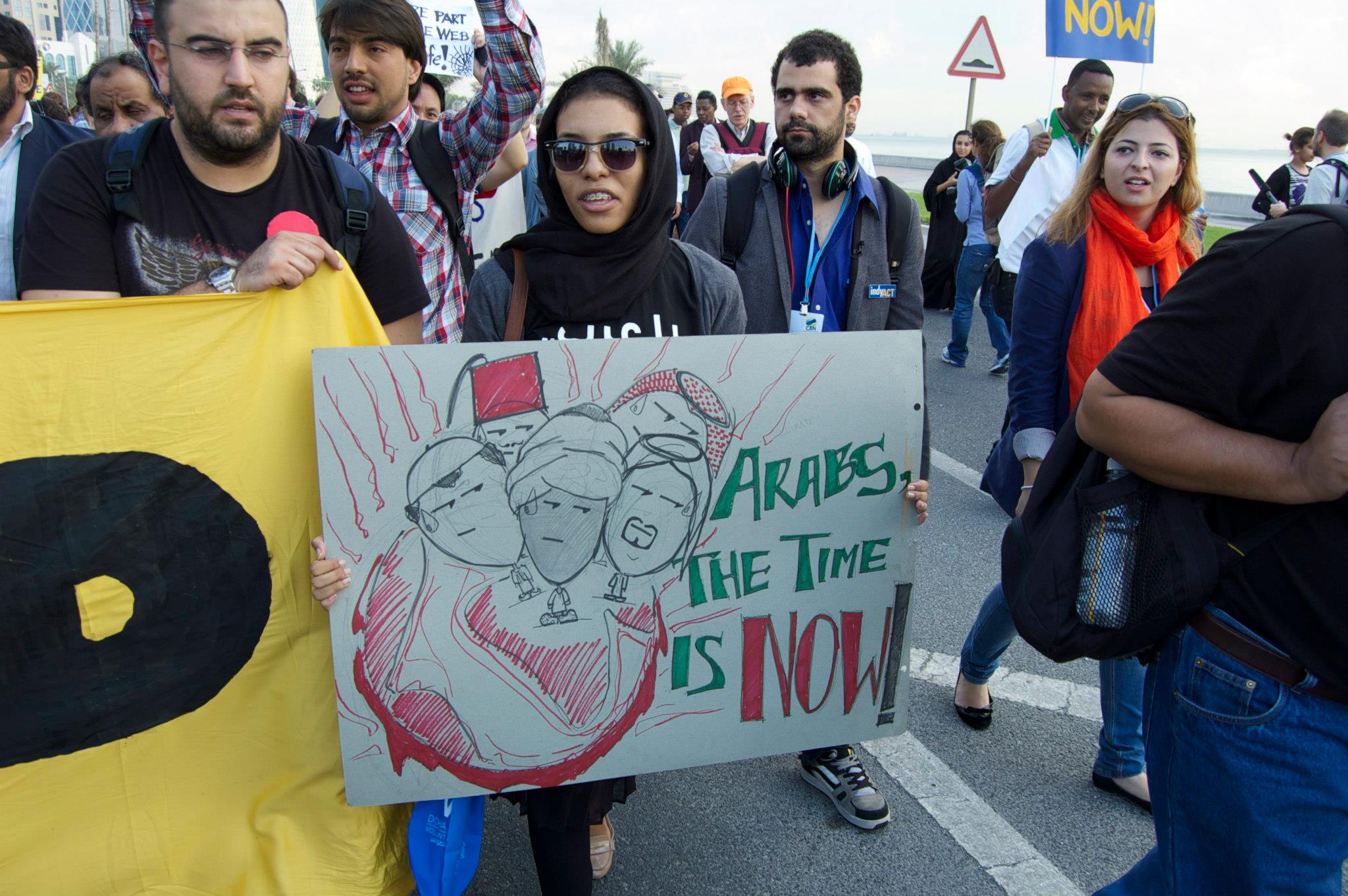
Civil Society Marginalization

ECO has been pondering the evident marginalization of the ‘civil society voice’ lately and started scribbling a few preambular thoughts on a serviette…

Reaffirming that vibrant public participation “allows vital experience, expertise, information and perspectives from civil society to be brought into the process to generate new insights and approaches”¹;

Acknowledging the respectful, positive and constructive dialogue at the December 1 ADP Special Event;

Encouraging Parties and the Secretariat to provide roundtables and other opportunities to enhance the full inclusion of civil society as a relevant and meaningful voice in these negotiations; . . .

#Operative text…

¹ Guidelines for participation of representative of NGOs at meetings of the bodies of the UNFCCC.

1(b)(what??)

ECO is wondering how much more clarity this process needs. Amongst many others, the UNEP and the World Bank have pointed out that while there is still a chance to restrict temperature rise to two degrees centigrade, we are not on track to avoid dangerous climate change. ECO thinks that there is no disagreement about that.

So where are we on next steps to address this issue and agree on essential and urgent mitigation action? Well, the Umbrella group seems to be telling us that there is no need to worry because they are making progress – they have a proposal for a new process! Yes, the Umbrella Group is proposing to clarify the pledges under 1(b)(i) and have suggested a two year programme to do so.

ECO would like to get a couple of points in this proposal clarified. You’re saying you need more time to talk? And that there will be no agreement of common accounting rules here?

Surely a bit of common accounting for 1(b)(i) pledges would allow the mist to clear and help Parties to check comparability of effort? Just set out a carbon budget for 2020. If you think there is no need to compare apples and oranges, you could just check the number!
... Read more ...