Category: Previous Issues Articles

Necessary Elements to Address Loss and Damage

Hello there, yes, it’s us again.  ECO was hoping not bring this up one more time but the negotiations leave us no other choice.

With only two days of COP 18 left, we will continue to fight for an agreement that will give Loss and Damage the international political recognition that it deserves.

Running and hiding from the reality of climate change is not an option and will only delay the inevitable. So let’s face it, address it and act on it.

ECO is putting these cards on the table for one more push!

  1. When all the developing countries are calling for an establishment of an international mechanism to address loss and damage here in Doha, Ministers should sit up and decide now. Every single day, it becomes more urgent as climate impacts are getting more severe from our failure to mitigate emissions.
  2. Endorse and promote continuation of the work programme of Loss and Damage. It has been shown to be a vital tool in assessment of, and approaches to, loss and damage, particularly slow onset events. This will also facilitate further discussion on the institutional arrangement of the international mechanism — so let’s make it a clear priority for future actions.

... Read more ...

Searching for Equity

ECO wants to remind the Parties that embedding equity in the climate regime is fundamental to any fair and ambitious outcome. While Parties have expressed their views on how to move toward operationalising equity, this aspect is reaching the vanishing point in the texts.

ECO thinks it would be pretty easy to measure, report and verify the disappearance of political will when Parties enter the negotiating rooms in the QNCC. That’s the real problem in these negotiations, as reflected in the weak language on equity in the latest texts from both the LCA and the ADP chairs. And that sends a very negative message to areas around the world struggling every day to survive against the adversities of climate impacts.

And yet, innovative and even transformative concepts are readily available.  Recently, Belgium and Sweden convened a rich and interactive meeting of experts and stakeholders in Brussels. Indeed, the ideas discussed in the Brussels workshop are immediately relevant and can be transformed into workable forms in the negotiations. Once again, the message from workshop participants was loud and clear: what we are facing is not a dearth of ideas or resources but instead a pervasive vacuum of political will.

One aspect of reviving momentum is to try out creative approaches. 
... Read more ...

Breaking the ‘Hot Air Impasse’

The Kyoto Protocol is a consensus-building and democratic treaty. In adopting any amendments, the KP’s procedures try to keep everyone happy by ensuring every effort is taken to achieve agreement by consensus.

But when a country, or even a few countries, are blocking progress, the KP also allows an amendment to be adopted ‘as a last resort’ by a three quarters majority vote. Once the minimum requirements have been reached, amendments of course only enter into force for those countries that have deposited their instruments of acceptance – otherwise they cannot access the new benefits that the KP, as amended, can bring.

Concerning the the ‘hot air’ problem, for example, this means that if Russia decides not to agree or ratify an amendment that would cut out 13 Gt of hot air, they would still keep their surplus credits but there would be no market for them. In that instance, those that did ratify such an amendment for CP2, giving them continued access to the Kyoto mechanisms, and with their new QELROs inscribed in Annex B, would have agreed not to buy any such hot air.

On a related subject, ECO reminds the EU member states – and the European Parliament concurs – that under the EU treaties their common positions on environmental issues can be agreed by qualified majority voting.
... Read more ...

Toward a Meaningful COP 19

ECO holds no brief against Poland as a travel destination. It’s a nice country with cold winter weather but warm and friendly people — but it’s definitely not the right place to host COP 19.

Hosting a COP requires actively working to get a meaningful outcome based on environmental integrity and flexibility. Host countries must be flexible enough to set aside national interests to address the concerns of all parties and find workable and constructive compromises.

Flexibility for the sake of common benefit and environmental integrity is something that the Polish government has not been succeeding in recently.

Agreeing to the full cancellation of ‘hot air’ after the second commitment period would be the best step to strengthen your hand, Poland, and show the world that you understand the true meaning and objectives of this process.

Otherwise, we will still come and visit, but we’ll do it over holidays and we will search for another Presidency that can really contribute to the ultimate goal of the COP which is limiting global warming well below 2°C.

Fossil of the Day

The First Place Fossil goes to the United States. The world’s poorest and most vulnerable people, and many fragile and precious ecosystems, are already being hit by the devastating impacts of climate change…

Establishing an International Mechanism on Loss and Damage here in Doha is vital to ensuring that the impacts of climate change, both extreme weather events and slow onset events, are dealt with. However, the US in particular, with support by Australia and Canada, is killing the issue by pushing for loss and damage to be dealt with under the Nairobi Work Program and Adaptation Committee.

All the parties here in Doha – including the US – must support the proposal by the G77, China, AOSIS, Africa Group and the LDC Group to establish an International Mechanism on Loss and Damage and continue the work program so other elements can progress.

The Second Place Fossil of the Day goes to Japan for no pledge, no urgency, no money. Japan has failed to reconfirm its pledge to reduce emissions by 25% by 2020 compared to 1990 levels in the opening speech at the Minister’s roundtable. In fact, the Minister did not mention any target at all! No Pledge.

Japan has completely ignored the core discussion here in Doha, which is how to raise the level of ambition to keep the temperature below 2 degrees.
... Read more ...

Ministerial Manners When Dining in Doha

Most developed countries came to Doha eager to move on to a new track of negotiations, even while several critical issues from recent years of the talks are left unresolved. It is vital these issues are addressed before the talks move on.

Like all good mothers, ECO wants to tell developed country ministers they can’t have their dessert before they have finished their mains, including all their vegetables. They need to eat up fast, because we won’t solve the climate crisis until everyone in these talks has finished their meal.

Developed countries have responsibilities under both the Kyoto Protocol and the LCA track that must be fulfilled in Doha. Chief among these are a second commitment period of the KP – and one that is worth the paper it is written on – raising their mitigation ambition, and showing how they are going to deliver their $100 billion per year climate finance commitment. Unless these things are delivered, the new Durban Platform (ADP) track will lack the solid foundation it needs to ensure a step change in climate action in the years ahead.

But with the resolution of these issues and this foundation laid, the ADP can and must kick start a new era of climate negotiations in a spirit of trust, solidarity and collective action.
... Read more ...

We Stand With Philippines

image-358


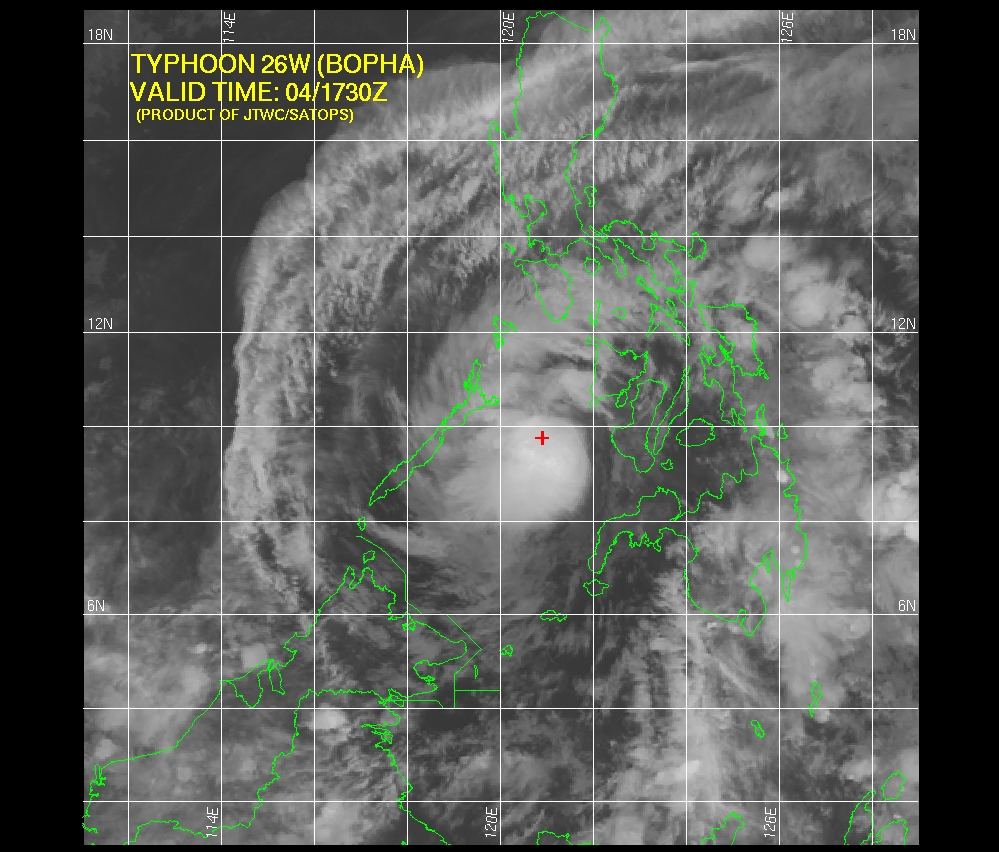
As climate talks enter their second week, the reality of a changing climate is striking home. In the LCA Plenary session Monday, a delegate from the Philippines said “instead of getting ready for Christmas, we may be counting our dead”, referring to the impending landfall of Super Typhoon Bopha. On Monday night, the storm caused over 40,000 people to flee their homes, and many wait to see the impact of the 16th extreme weather event to batter the Philippines this year.

Meanwhile, ambition remains off the table in Doha. The outcome on loss and damage lacks any mechanism necessary to address bigger issues. Policies limiting polluting industries’ drive to blow past our global carbon budget are more than dreams of civil society and nations already bearing the brunt of a warmed world.
The time for talk has run out. Yet still the talks stagnate, and those responsible for this crisis stand in the way of justice. Blocking ambition and equity on the global scale is a criminal act. It is, at a minimum, the willful destruction of property and the knowing neglect of human life and loss. The parties who continue to defend business as usual are guilty, and history will judge them as such.
... Read more ...

Which Way, Japan?

ECO is concerned to hear that Japan may not keep up its 25% reduction target by 2020 compared to 1990, and instead is considering reducing it to around 5 to 9% (domestic reduction target).

Of course, Japan has already undermined the momentum of the negotiations by rejecting the Kyoto CP2. If Japan now lowers its voluntary pledge under the Cancun agreement, that reduces ambition and credibility. ECO worries that perhaps Japan’s voice might be not taken seriously anymore.

To some extent, the country has already lost its credibility in the last two years. Now is the time for the Japanese Minister to step up and announce that Japan aims to do everything possible to keep the 25% target intact. It should also pledge appropriate funding for the period 2013 to 2015. This is the only way to regain its positive and constructive role for the global effort to tackle climate change.

Next Steps to Enhance the Review

The start of the first periodic review (2013 – 2015) is approaching. This is intended to be a strong science-based instrument to increase ambition.

But still there is no decision on which body will conduct the review. Informal groups have ongoing meetings but there has not been much convergence. The most convincing solution would involve a review expert group which would preferably be established here in Doha and assisted by the Secretariat going forward. This group would gather new scientific intelligence from the coming Fifth Assessment Report of the IPCC and many other sources including the UNEP gigatonne gap overviews, biannual reports and reports from ICA and IAR.

Of course inputs and submissions from Parties are necessary. But ECO is perplexed: why is there no mention of observer participation in the draft decision, through submissions or otherwise? Surely those experiences, data and insights can add measurable value to this crucially important new initiative.

Ray of the Day

image-361
Ray of the Day goes to the United Kingdom for being the first mover on announcing a post-FSF pledge.

The UK announced today its climate finance will be £1.8bn over the next two years, which is a 40% increase on FSF levels, with 50% of it being dedicated to adaptation.

This announcement sets a constructive tone to the negotiations on finance here in Doha. We urge other developed countries to start putting money on the table and commit to post-FSF going up not down.

While this commitment is certainly noteworthy and welcome, in othercircumstances, it may not have met the “Ray of the Day’s” stringent standards.

What makes it worthy of such a coveted recognition is that the UK government has gone first. Rather holding back its commitment to exact concessions from other Parties, the UK has done much to create a positive dynamic by putting it forward early in the Ministerial session, and with no apparent strings attached. We look forward to other donors coming forward in similar fashion over the next three days, and we think that this cooperative approach is one that all Parties should emulate.