Category: Previous Issues Articles

Assessing the assessment phase discussion: part II

ECO thinks that the ADP has a pretty simple job in designing the next phases of the INDCs process. After completing the information requirements, we simply need an  INDCs assessment phase, as pointed out by AILAC and Palau. The first step of the assessment phase is – you guessed it- all parties submitting INDCs by March 2015. This could not be simpler, really.

March 2015 is only around the corner. Parties need to start preparing their INDCs from the moment they get home. While they make their preparations, Parties should remember that mitigation contributions alone will not pass the assessment test. Both mitigation and finance contributions are necessary to shape an acceptable INDC for a wealthy country. ECO welcomes Mexico’s clear statement in this regard and reminds developed countries about their responsibility to play a leading role on finance.

Scaling up INDCs during the assessment phase may be a frightening idea for some Parties. ECO has just the thing to cure that phobia: produce ambitious INDCs in the first place and, if these still fall short of the level of action required, complement increased emission reduction targets with other types of contributions. For example, in the assessment phase, an absolute emissions reduction target as an initial NDC can be strengthened by additional efforts to scale up renewable energy and/or energy efficiency.
... Read more ...


Tony Abbott’s plan: surreal and catastrophic

Australian Prime Minister Abbott’s fossil fuel celebration tour got even more surreal yesterday when he donned a cowboy hat in Texas. Abbott also offered up his long term view on the prospects for coal —he believes that it will fuel human progress for many decades to come. Meanwhile, here in Bonn, delegates were treated to a glimpse of what the world would look like if Abbott’s dystopia came to pass.

The topic was the melting of Antarctic ice sheets and the latest scientific findings that melting in massive areas of the polar region has recently passed a tipping point. Much of the Western Antarctic ice sheet is now melting and likely to contribute to devastating sea-level rise, a catastrophic consequence.

Abbott had better hold onto his hat tightly while riding the coal-power bull. He may be shouting “Yee-haw”in Texas at the moment but this crazy ride can only end with floods of tears.

Well done Germany, what about coal?

ECO was delighted to hear that Germany has decided to stop export credit guarantees for nuclear installations abroad. Well done to our hosts – but here’s our first question: why did it take 13 years to draw the logical consequence from the 2001 decision to phase-out nuclear power? Only three years ago, the conservative-liberal government tried to mobilise another €1.3 billion export guarantee for Areva to build the Angra-3 nuclear reactor in Brazil. Only a strong refusal by Parliament and civil society stopped this crazy plan.

Today, Germany has become the country of the Energiewende, and wants to be seen as the front-runner in clean energy. Renewable energy is speeding up and it has already reached a 27% share of electricity. Renewable energy is seen as the backbone of Germany’s efforts to reach its national GHG reduction targets of 40% by 2020 and 55% by 2030.  Energy efficiency also needs a similar emphasis.

So, dear German government, if you have decided that renewables are the way to go, here is ECO’s second question: Why are you stopping export guarantees for nuclear, but still giving export credits to coal power plants all over the planet?

Between 2007 and 2013, developed countries collectively provided US$36 billion to coal through their national export credit agencies.
... Read more ...

ECO’s Climate Summit expectations

As the UN Secretary General’s Climate Summit approaches, we are sure Parties, investors and businesses are wondering how to pack their bags and appropriately prepare for New York this September.

ECO would like to help. We know that Parties sometimes struggle with long lists of things they need to prepare. There is a regrettable tendency for some Parties to forget what they have already packed interventions in their bags already, or to wear old items of clothing in the hope that we don’t notice that it’s just the same old thing refashioned.

However, without any kind of a list to work from, ECO is concerned that Parties will arrive in New York completely not dressed appropriately for the occasion. Hot air and vague promises are not going to provide the cover needed at the summit. So here is what ECO recommends that Parties should pack for the Climate Summit:

1) New measures to scale up investment in, and deployment of, renewable energy and energy efficiency. This will to help fill the pre-2020 mitigation gap, but will also help you to pledge your support for a just transition to a fossil-free and 100% renewable future by 2050.

2) Then, if you are committed to a just transition, you will want to come to New York with substantial pledges for the Green Climate Fund and a commitment to increase the overall scale of climate finance.
... Read more ...

Happy Global Wind Day

  • Global wind power has already crossed the 300 GW mark. Installed capacity now equals the capacity of all power plants in South and Central America!
  • The wind industry provides 650,000 jobs worldwide.
  • Wind power is cheap and ready to go. In Australia, power can be supplied from a new wind farm at a cost of AU$80/MWh, compared to $143/MWh from a new coal plant.
  • EU citizens pay €2 every day for the EU’s fossil fuel imports.

Wind power

Renewables save money, lives and jobs

ECO is excited about the many voices in favour of a future powered by renewable energy. On Thursday, it was UNEP’s turn to explore the role of renewables and energy efficiency (RE & EE) in achieving Sustainable Energy for All. Their side event presented, among other things, findings from the International Renewable Energy Agency’s (IRENA) REMAP 2030 study.

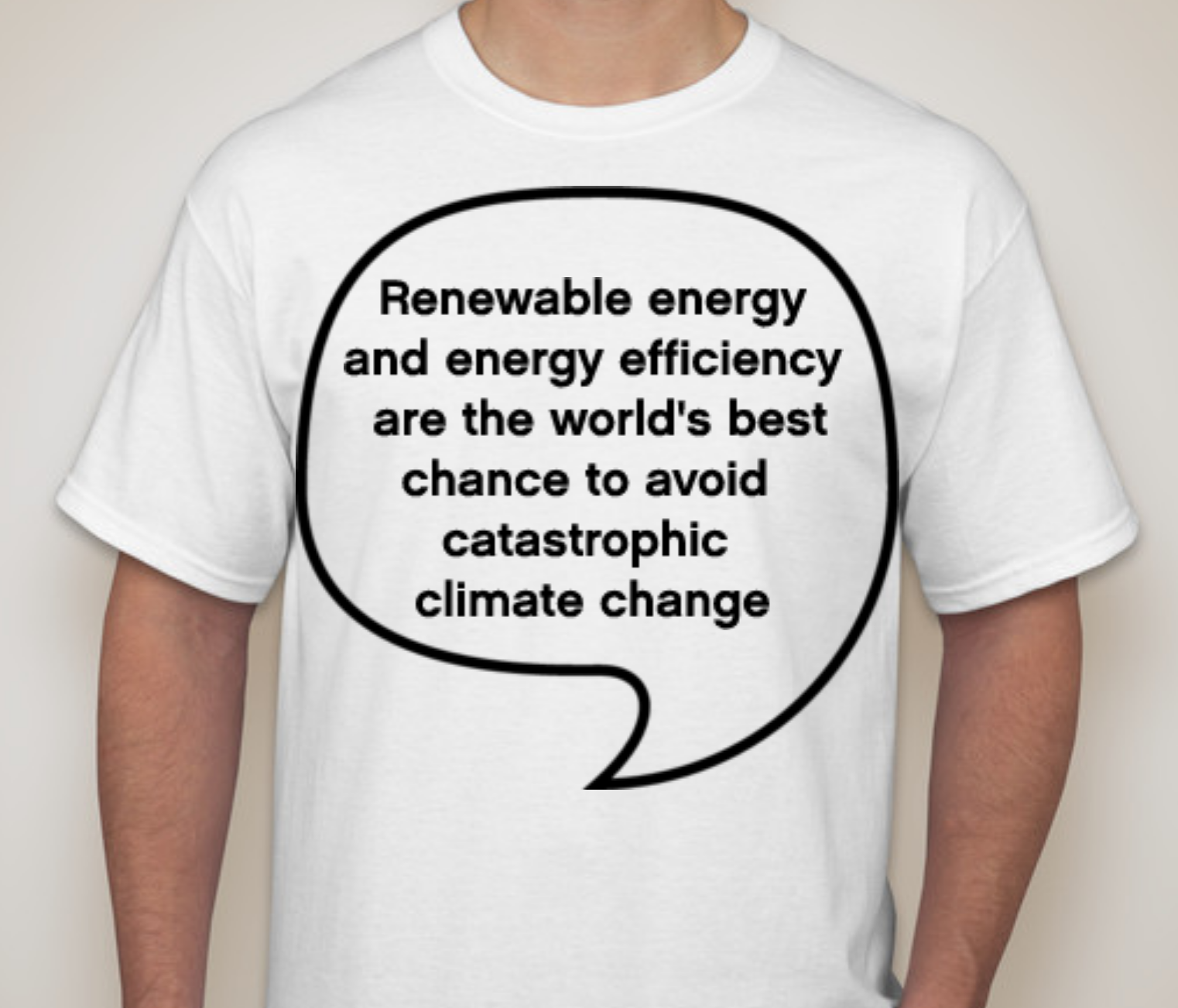
ECO finds some of the findings so cool that they should be printed on T-shirts, so we did:

RE-Shirt
image-3657

Or how would “If we use more renewable energy, we save money” work on a poster hanging in a minister’s wall?

Renewables are crucial in achieving modern energy access for all. According to IRENA, renewables are now the lowest-cost solution for new capacity in an increasing number of countries and regions. Many RE technologies are significantly cheaper than diesel- or kerosene-based systems, and cheaper than extending the grid into rural areas with low per capita energy demand. In addition, renewables offer more security and greater reliability than fossil fuels.

There are other benefits too. Doubling the share of RE in the global energy mix to 36% by 2030 could result in 900,000 additional direct jobs in the energy sector, and reduce health-related costs by up to US$200 billion annually.
... Read more ...

Thank you

A heartening moment occurred yesterday before an informal conversation on the coordination of support for REDD+. Many Parties, literally, stood side by side with NGOs and refused to enter the meeting room until the NGOs were also allowed in – which they eventually were. ECO thanks the Parties involved and hopes that this sort of Party-driven support for transparency will catch on.

After an ‘own goal’ on consultation, Brazil is back in the lead

Yesterday, ECO reported that Brazil had failed to consult with Brazilian civil society before submitting its Reference Levels to the UNFCCC, and that it had not yet made the submission public. Today, we are pleased to report that the submission has been published on the Brazilian government website, apparently while yesterday’s article was in press.

Now that the submission is no longer a black box, ECO wants to properly congratulate Brazil on being the first country to submit its reference levels. We hope other countries will soon follow, with due consultation and transparency. While ex-post assessment is no substitute for prior consultation, at least now, the submission can be properly analysed and assessed. Brazil seems to be trying, but needs to work harder to become a role model in transparency and consultation.

EU’s Kyoto ratification and Poland – the sequel

Dear Reader, do you remember when ECO wrote, a few nights ago, about Poland being a total bully, again, and trying to use the EU’s KP ratification as a bargaining chip for the upcoming 2030 discussions in the EU?

Here comes the sequel: yep, you heard it right— this is what is happening. Two days ago, at the EU environment ministers meeting, Poland refused to agree to let the EU’s ratification process move forward. Instead, Poland is planning to table a new proposal which includes… wait for it… hot air for Poland! Never mind the rest.

As it seems that Poland is not hearing ECO’s “stop the madness”calls — could you help us out, Dear Reader? Whenever you see a Polish delegate, please tell them to stop.

From Bonn to New York

As we wrap up in Bonn, New York is preparing to host an equally important process, the penultimate session of the Open Working Group (OWG) on the Sustainable Development Goals (SDGs).

ECO’s done its homework and can tell you that the linkage between climate change, poverty eradication and sustainable development makes it clear that the post-2015 sustainable development framework will fail if climate change is not adequately addressed within it.

In an open letter, more than 170 civil society organisations and networks, from over 50 developed and developing countries, have called for the “framework to address climate change in a manner that recognises the urgency and importance of dealing with the most fundamental challenge of our time”.

They call for a separate, stand-alone climate change goal, and for climate elements to be included in other relevant goals: “A robust framework of this nature will help to support the scale of ambition needed to achieve the UNFCCC’s aims and help to ensure the delivery of a strong climate deal at COP21 in Paris in 2015”.

ECO expects negotiators in New York to take note: strong and ambitious climate goals need to be part of the SDGs.