ECO Newsletter Blog
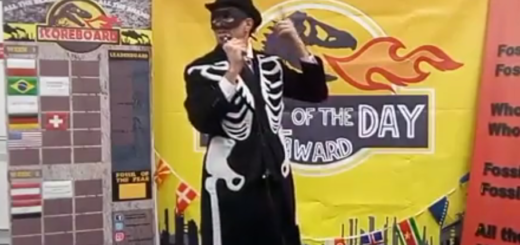

ECO 9, UN Climate Conference, Katowice, December 2018 – The We Aren’t Neglecting The Talanoa Issue

12 Years Left
With this afternoon’s plenary, the Talanoa Dialogue will come to a close. After a year of listening to the stories, perspectives and solutions put forward by Parties and non- Parties alike, and absorbing the unsettling implications of the IPCC SR 1.5°C, ECO is convinced that the way forward is now clear.
To have any chance of staying below 1.5°C and avoiding the worst impacts of climate change, Parties must significantly enhance their current nationally determined contributions (NDCs) by 2020. With its decision the COP should provide very clear direction for countries to raise ambition.
Fortunately, as many contributors to the Talanoa Dialogue noted, the necessary actions need not be costly for countries to adopt —and in fact they can provide substantial economic and development benefits. ECO was thrilled to hear about all the solutions, benefits, and actions that are taken by non-party stakeholders on domestic, regional and international levels.
Since the original NDCs were put on the table in 2015, advances in technology, policy and finance have meant that a significant and growing array of climate solutions are cheaper and more effective than higher-carbon alternatives. These solutions can increase the overall well-being, and advance a countries’ development goals, even before climate impacts are considered.
... Read more ...
Don’t Forget Loss and Damage
A lot is at stake at COP24 in the last days.
The IPCC special report on 1.5°C made clear how urgent climate action is, and that impacts already occurring today require immediate measures to, in particular, protect the poorest and most vulnerable.
It is abundantly clear that more finance is needed for loss and damage. We’ve seen developing countries face impacts to the tune of 200% of their GDP in one hurricane that has been amplified by climate change.
Listening to statements by ministers yesterday, ECO feels it is clear what needs to be done to give loss and damage an appropriate reflection in the overall outcomes of this conference. The Cook Islands, for example, highlighted that “Loss and damage must be given a far greater priority. It is fundamental in the context of the IPCC SR1.5.” The Minister of Vanuatu stated that it “pains me deeply to have watched the USA and others putting red lines through any mention of loss and damage.” Tuvalu outlined that “Loss and damage should therefore be fully integrated into the Rulebook, including on transparency, capacity building, and the global stocktake.” Vanuatu’s Minister also stressed that a climate damages tax would be “a win-win option for developed and developing countries alike.
... Read more ...
Will EU Finally End its WTF Approach to Forests?
ECO is old enough to remember the forest accounting rules negotiated in 2011 for the second commitment period of the Kyoto Protocol. At the time, ECO warned the EU and other developed countries against the dangers of building their baselines on hypothetical projections that envisioned massive increases in emissions from the forest sector. Sadly, the EU and others went ahead and did it anyway.
So at a side-event this week, when it was revealed that the EU was scrambling to correct an unearned windfall on the order of 100 Mt CO2-e per year, ECO felt the tiniest twinge of smugness. If memory serves, that was just about what ECO had predicted for the EU way back in 2011.
Under Kyoto, the EU used a technique called Projected Forest Reference Levels. This involved projecting a hypothetical expectation of forest carbon emissions. You might call it a “Working Theory of the Forest”, or WTF for short. Under the WTF approach, countries could base these projections on modeled expectations, political goals, or really anything they could justify. And they just couldn’t hold back from the temptation to inflate these projections, creating the opportunity for undeserved credits.
Lo and behold, this played out just as ECO expected for the EU.
... Read more ...
A Cry for Help For Adaptation
Ministers, we need to talk. I know this might sound technical, but it’s not; this concerns you. There can be no ambition with so little support for adaptation.
The Paris Agreement seeks to achieve a balance between adaptation and mitigation finance, as well as attending to the particular needs of least developed countries (LDCs) and small island developing states (SIDS).
We’re not there yet. Only 26% of the USD $55 billion in provided support went to adaptation projects in 2016, (the number from multilateral development banks’ is even lower: 21%, according to figures from the Standing Committee on Finance’s (SCF) third biennial assessment report). Around half the bilateral finance provided to the LDCs and SIDS was earmarked for adaptation. That’s far from the “balance” agreed between adaptation and mitigation support.
ECO is even more concerned with the flows to vulnerable countries with less financial capacity to address adaptation and resilience efforts. 21% of finance approved by multilateral climate funds went to the LDCs. Funding directed at the LDCs represented 24% of bilateral flows, and that directed at SIDS accounted for only 2%. When developing countries say they need more support for adaptation, ECO understands why!
What’s more, according to SCF, only 9% of adaptation finance flowing through multilateral development banks was grant-based.
... Read more ...
To Ministers: A Few Tips For a Real Support Package
Dear Ministers,
Guess what, it’s already week 2, day 3! ECO knows that time flies when you’re having fun; but let’s stay focused. You will be faced with one of your biggest challenges since COP21 in the coming days: making sure the Paris Agreement will benefit from a fair, balanced, and complete Rulebook that will enable us to limit global warming to 1.5°C. Let us be clear: without consensus on the overall support package, a robust Rulebook and an ambition mechanism cannot be agreed upon. Failure to resolve the sticky financial issues will undermine trust between Parties, the eventual implementation of the Paris Agreement, and put at risk more ambitious global climate action for the years to come.
To help you navigate the many challenges related to finance, here are some final tips:
- Be Predictable! Article 9.5 is key to improving predictability of future financial support. A full operationalization would require qualitative and quantitative data to be provided every two years, submitted to a public registry and then synthesized, in order to inform the CMA and the global stocktake. Article 9.5 can give an indication of how provided and mobilized support aims to make financial flows consistent with a pathway towards low greenhouse gas emissions and climate-resilient development — but must not be confused with the obligations of developed countries in providing adequate, sustainable and predictable support.
... Read more ...
Voices From the Front Lines
In August of this year, the State of Kerala in India was battered by the worst flood in a century; costing around US$2 billion in damage to infrastructure and the economy. For nearly a whole month, the state was drowning. Unprecedented heavy monsoons linked to the changing ocean currents and warming seas swamped Kerala. The resulting damage was amplified by poor development decisions that had covered mountain and wetland ecosystems like the Western Ghats with concrete. The floods took away people’s lands, livelihoods, and lives.
The havoc in Kerala was met with extraordinary solidarity amongst people from all religions, classes and communities; the rich with the poor, urban citizens with rural people. Fisherfolks provided rescue support alongside the state’s disaster response teams.
In a country rampant with farmer suicides due to debts, corporate monopoly, and no provision for climate reparations, we do great injustice by not factoring in loss and damage. While India rallies for historic responsibilities and accountability from rich countries at COP24, can we look at ourselves in the mirror?
– Shradha Shreejaya
What the Health
Monday was the 70th anniversary of the United Nations Declaration of Human Rights, including “the right to health” which now has a stable place in the Paris preamble. But, where is health at this COP? In spite of the significance of health to humanity, it has not been incorporated into the language of the Rulebook.
Why should the COP outcome include a reference to health? There are two reasons. First, climate change has severe impacts on our health and is likely to have increasing impacts as the Earth warms further; heat exposure resulted in 153 billion hours of labour lost around the world in 2017, an increase of more than 62 billion hours since 2000. Secondly, climate change mitigation can have a major positive impact on health. For example, air pollution currently kills 7 million people worldwide every year. It also causes significant health problems such as asthma and respiratory issues.
When countries try to avoid ambitious mitigation targets because of economic reasons, they fail to recognise the economic benefits of improved health from reducing air pollution. Mitigation pathways identified in the IPCC 1.5°C report typically show that there are significant synergies for reducing air pollution, and that these synergies increase with the stringency of the mitigation policies.
... Read more ...
Talanoa Solutions: We Know What We Need to Do For 1.5
As Ministers wrap up the Talanoa Dialogue discussions today, ECO hopes that the process will lead to an ambitious COP decision and real transformation back home, to meet the 1.5°C target.
The IPCC Special Report has shown us the importance of the 1.5°C target. It has provoked a lot of new thought, prompting ECO to ask what roles the different sectors should play.
ECO reminds Parties that there is nothing to be scared of. Reaching the 1.5°C goal is technically feasible. It can be done in ways that can safeguard equity, food security, ecosystems and rights.
To help generate more excitement and action for the Talanoa Dialogue and real-world outcomes, ECO would like to throw some new ingredients into the mix; and we’re not just talking about a few extra cups of Kava, the Fijian drink that lubricated the early Talanoa Dialogues at COP23.
The recent IPCC report draws a red line on energy: the 1.5°C goal is only feasible if we rapidly phase out fossil fuels and transition to renewable energy. This means that coal must be fully phased out and renewables deployed to provide for global electricity by 2050. All Parties need to deploy energy efficiency policies to reduce consumption.
... Read more ...